
Lightforge PhotographyLightforge PhotographyLightforge PhotographyLightforge Photography
  • Work
  • Services
  • About
  • Blog
  • Contact
  • Work
  • Services
  • About
  • Blog
  • Contact
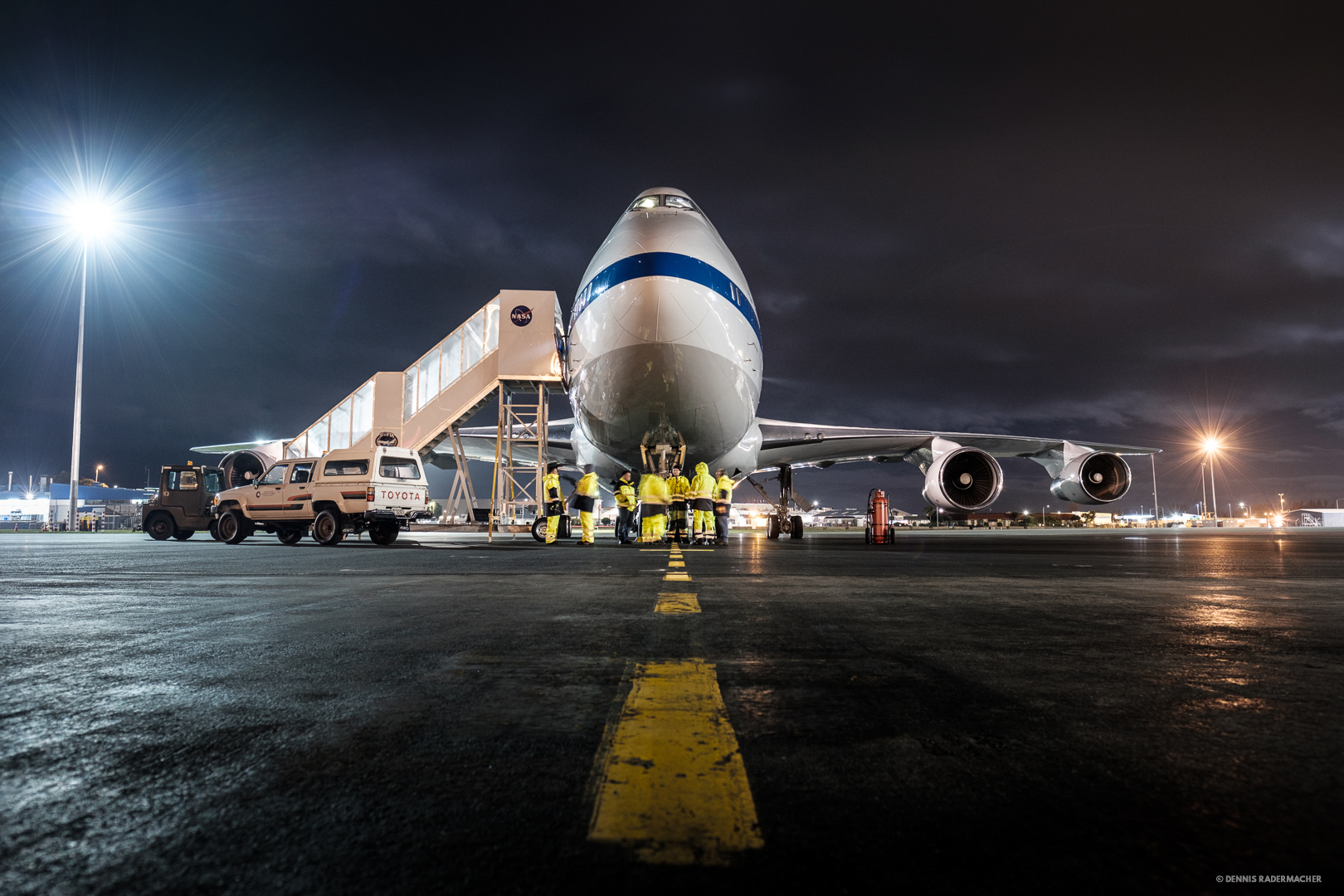
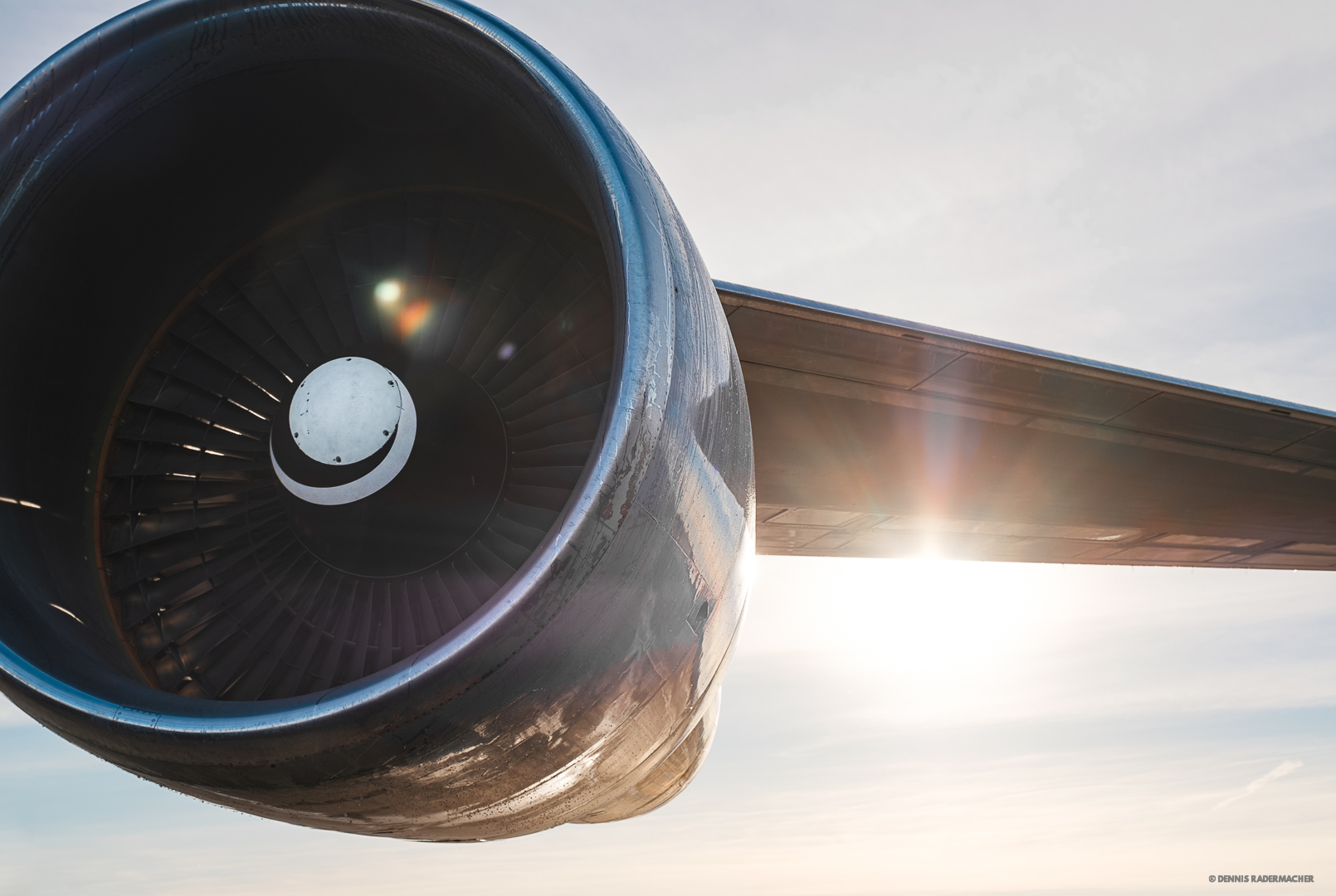
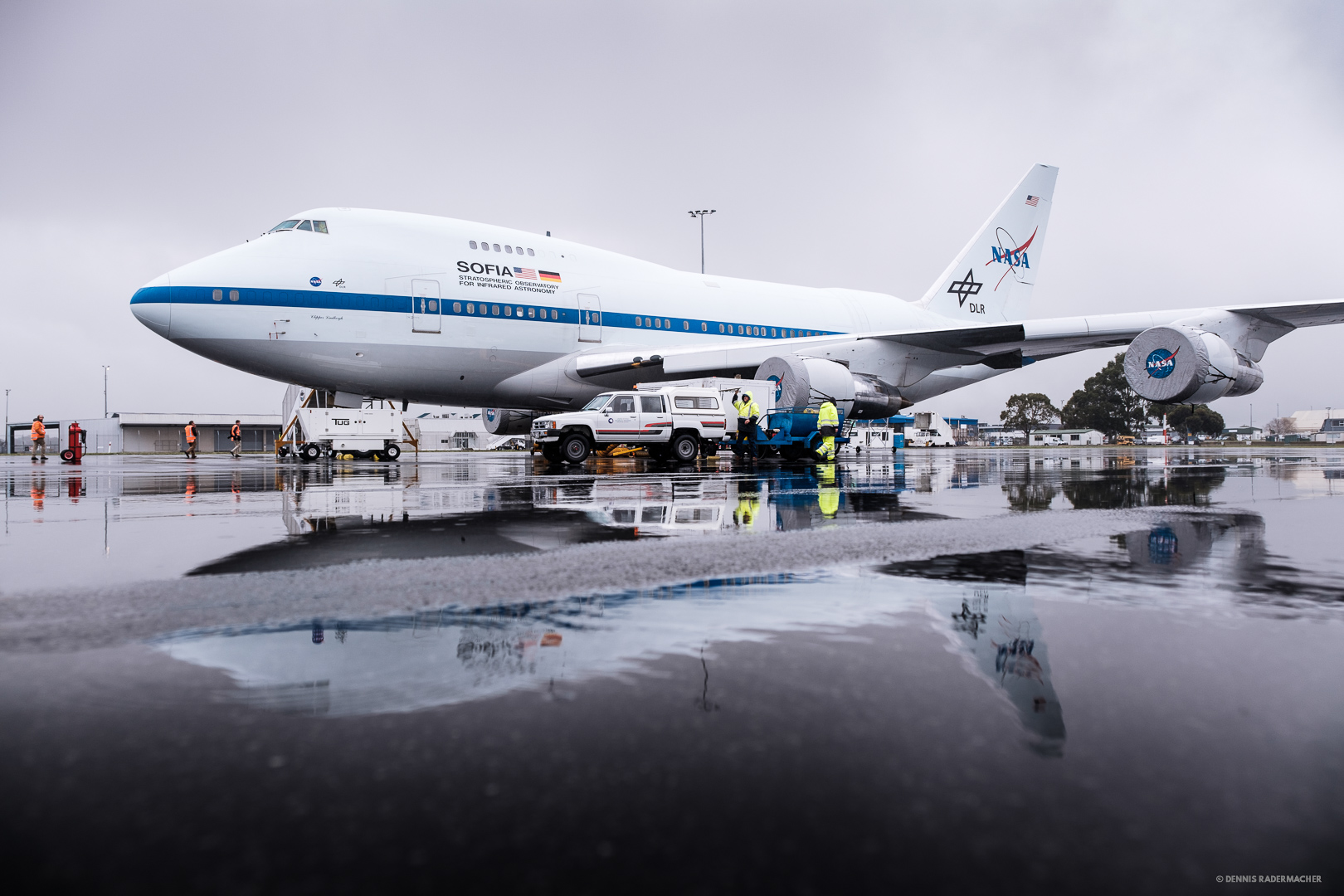
NASA's SOFIA mission carries the world's largest flying telescope inside a converted Boeing 747SP. When observation conditions in the northern hemisphere become unfavourable every June and July, the SOFIA team relocates to New Zealand for a few weeks.
'S' stands for Stratosphere. At an altitude of 13 km, well above most atmospheric water vapor, conditions are ideal for observations in the infrared spectrum.
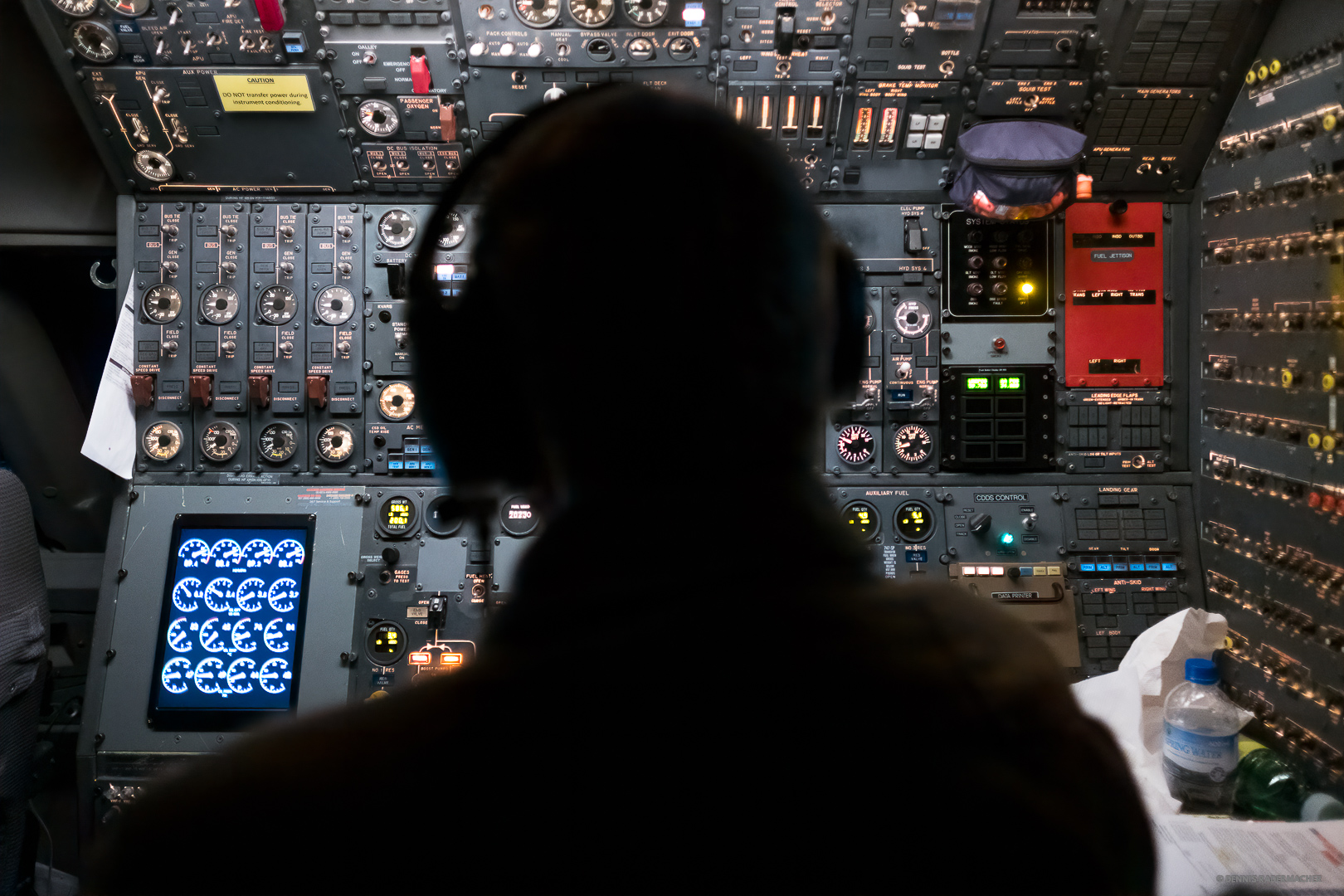
Avionics engineers aboard 'Clipper Lindbergh', the official name of the aircraft carrying the SOFIA team, track down a gear malfunction.
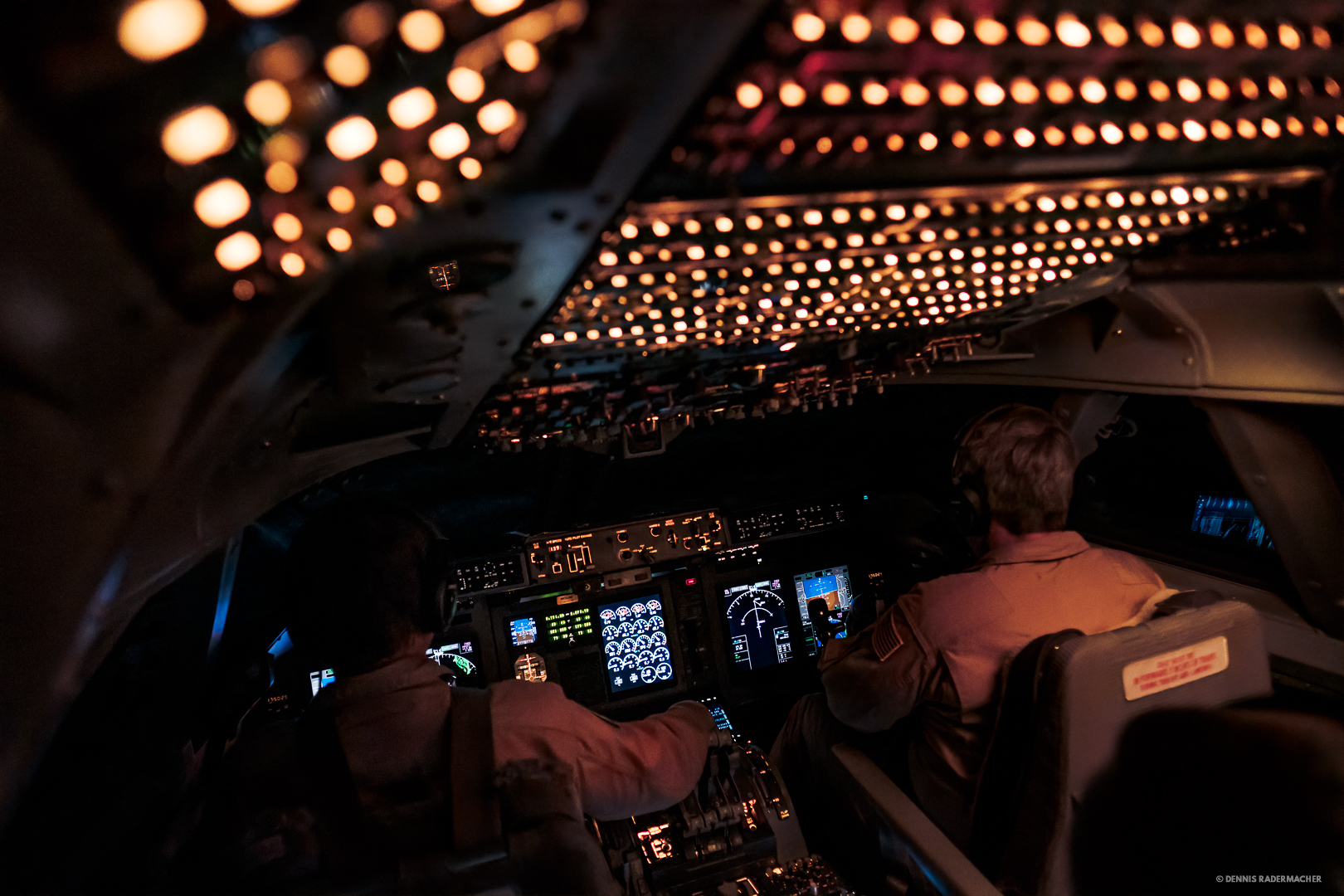
Due to complex flight plans that are sometimes scheduled down to the second, the aircraft carries a full complement of pilot, co-pilot and flight engineer.
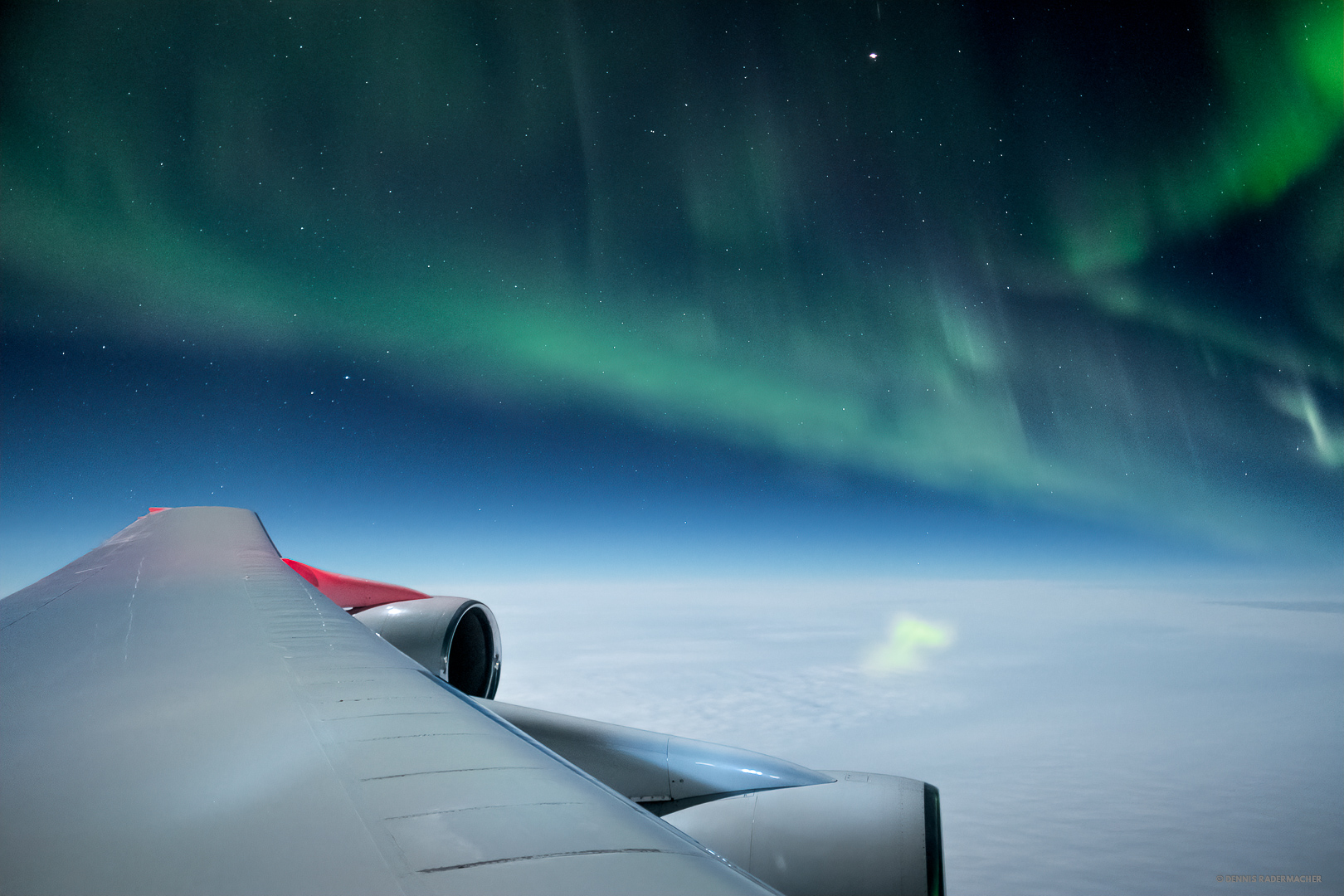
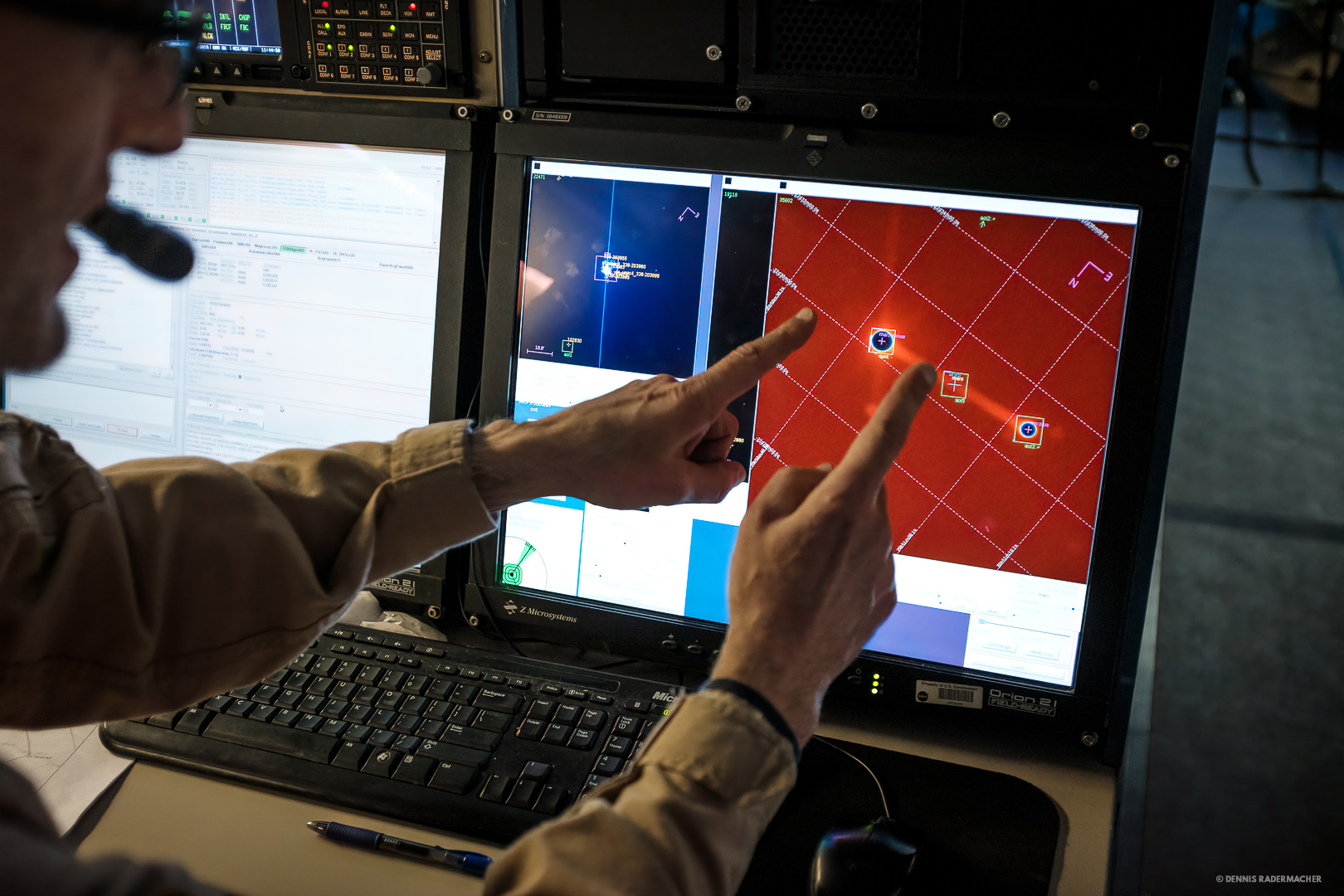
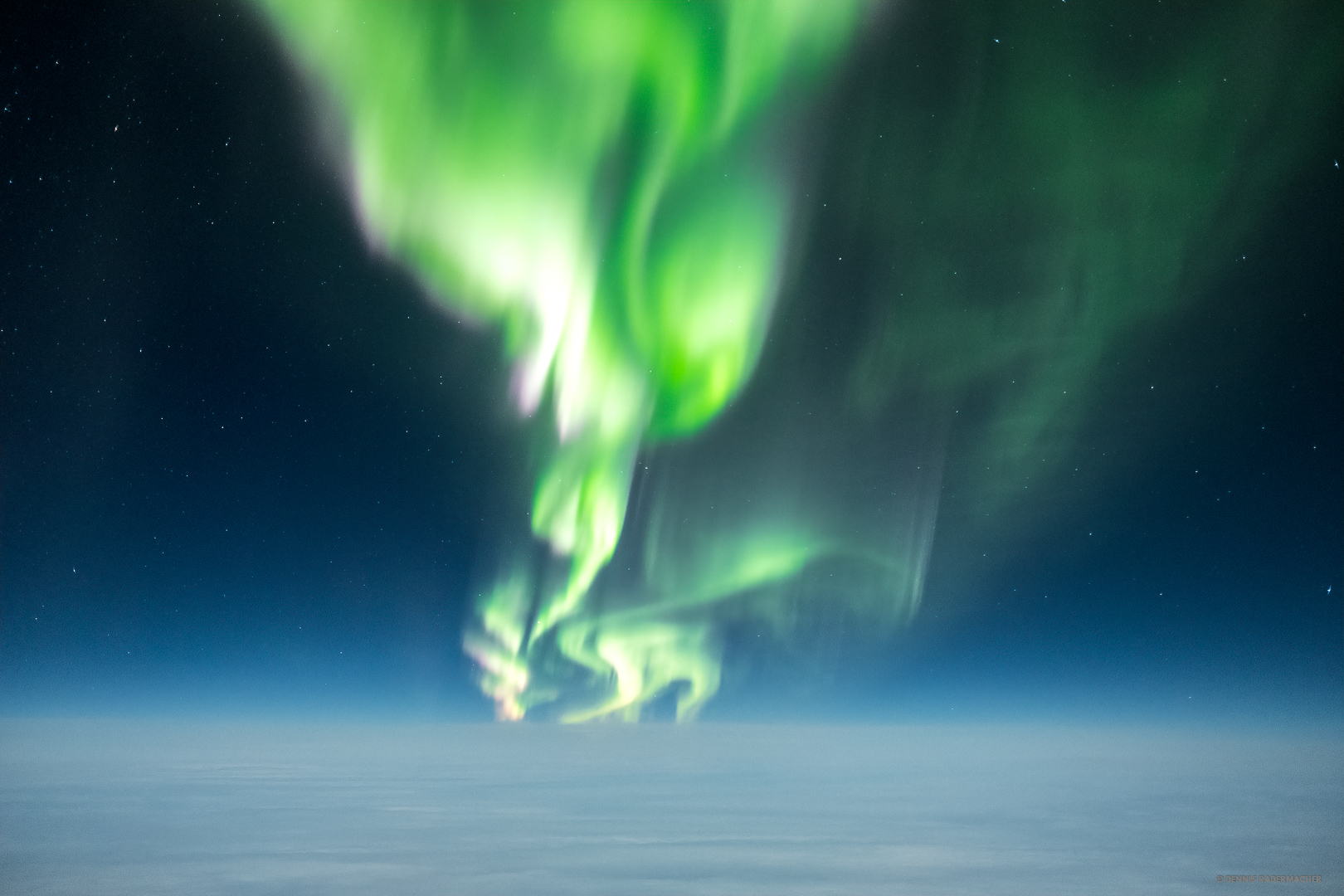
Aurora Australis pays SOFIA a visit above the Southern Ocean. Mars, the brightest pinpoint of light in the sky, is one of the main observation targets of flight 476.
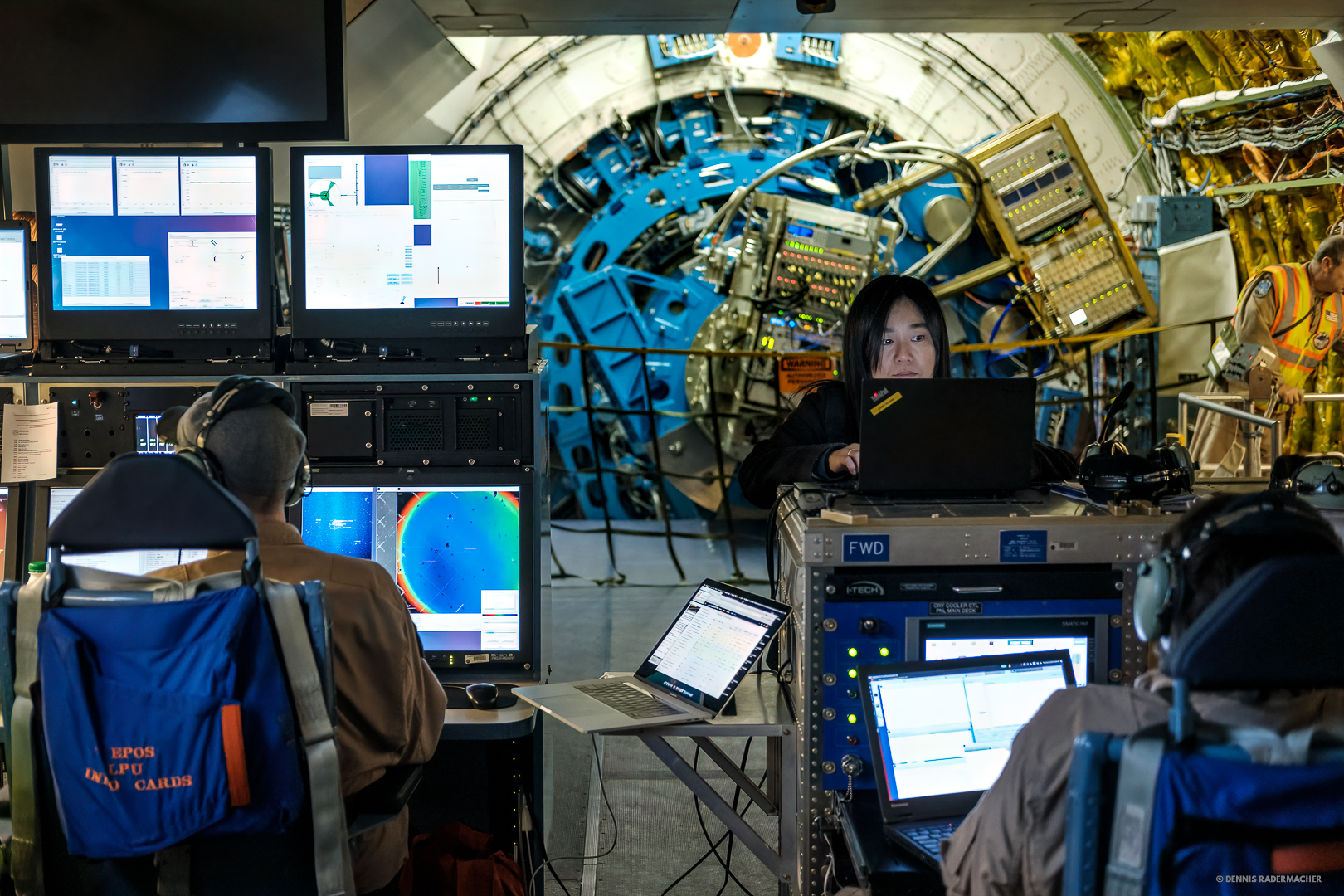
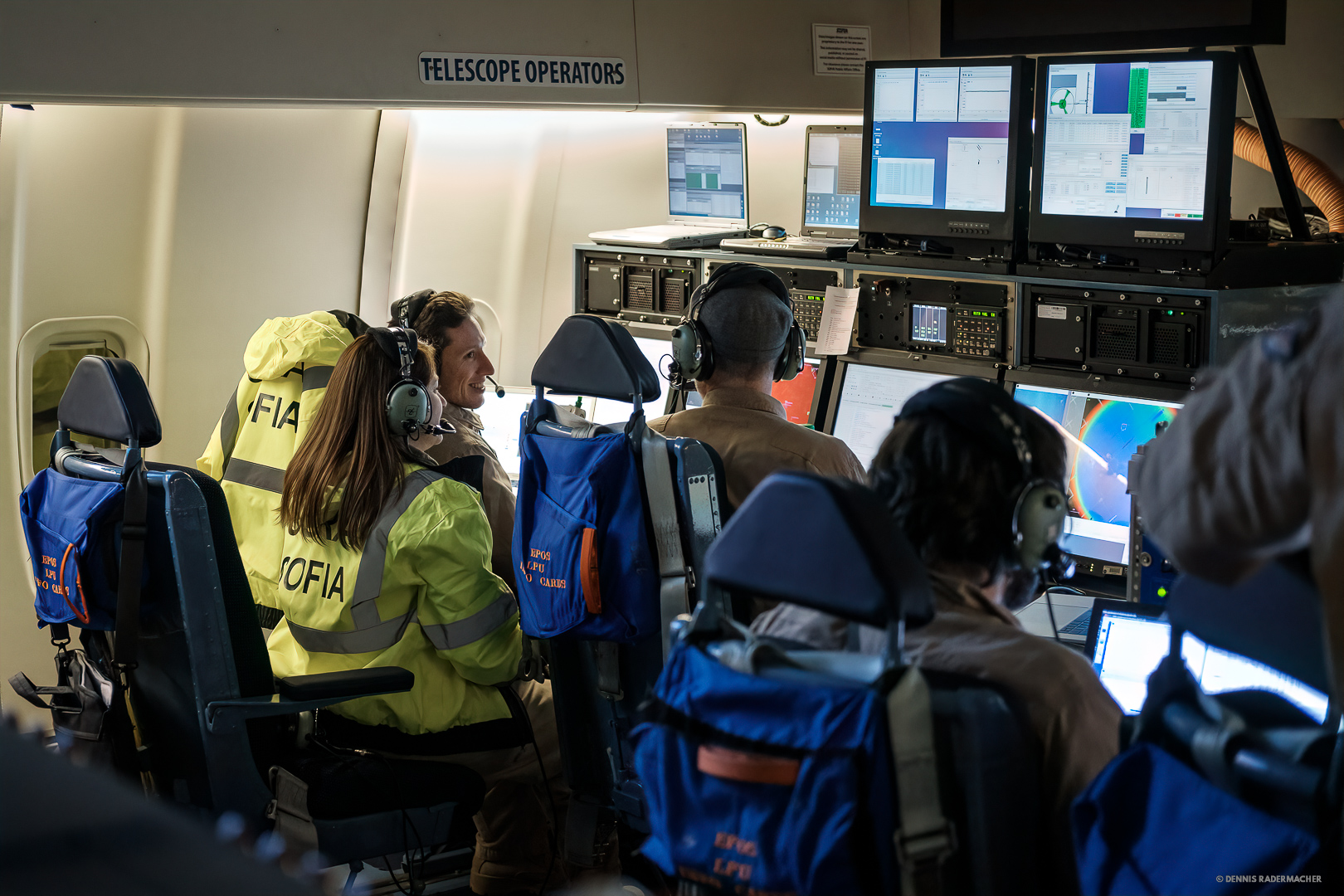
Scientists and telescope operators settle in for a long night of observations
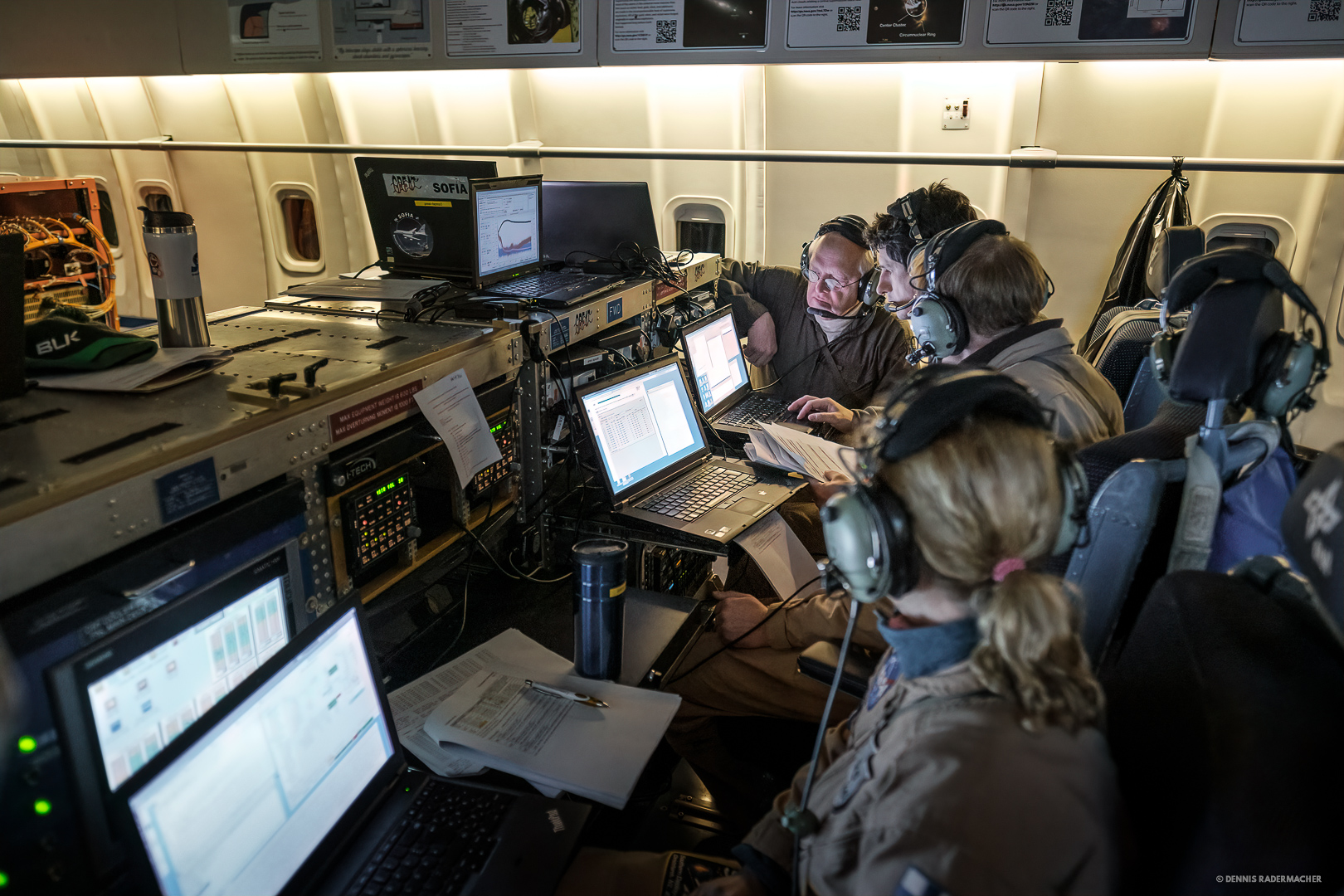
The GREAT science instrument team discuss their findings
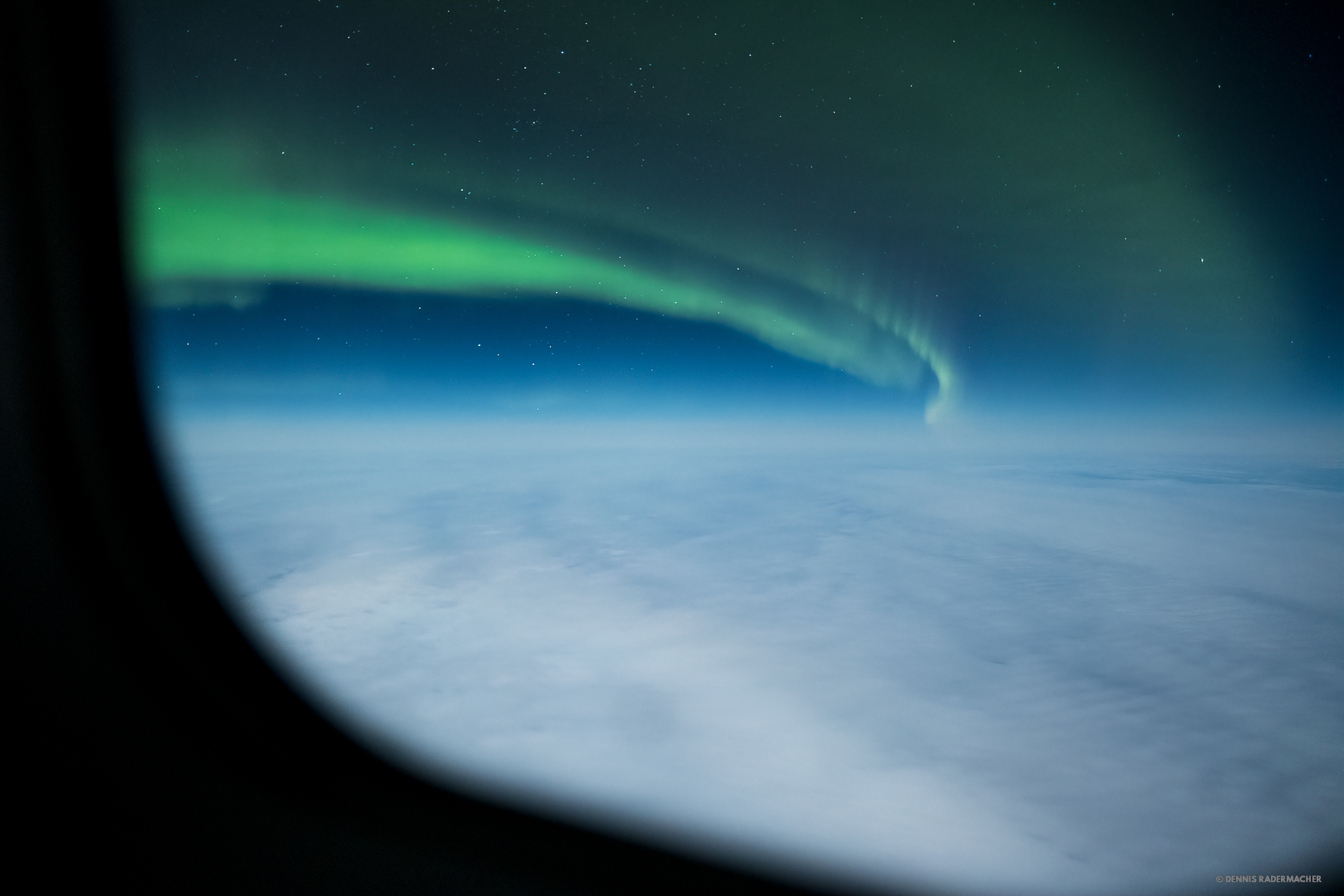
An Aurora wraps around the curvature of the Earth as Clipper Lindbergh approaches the Antarctic Circle.
Telescope operators Shannon Watters and William Montgomery in conversation with Mission Director Gabrelle Saurage.
Telescope Operator Shannon Watters explains the telescope calibration process.
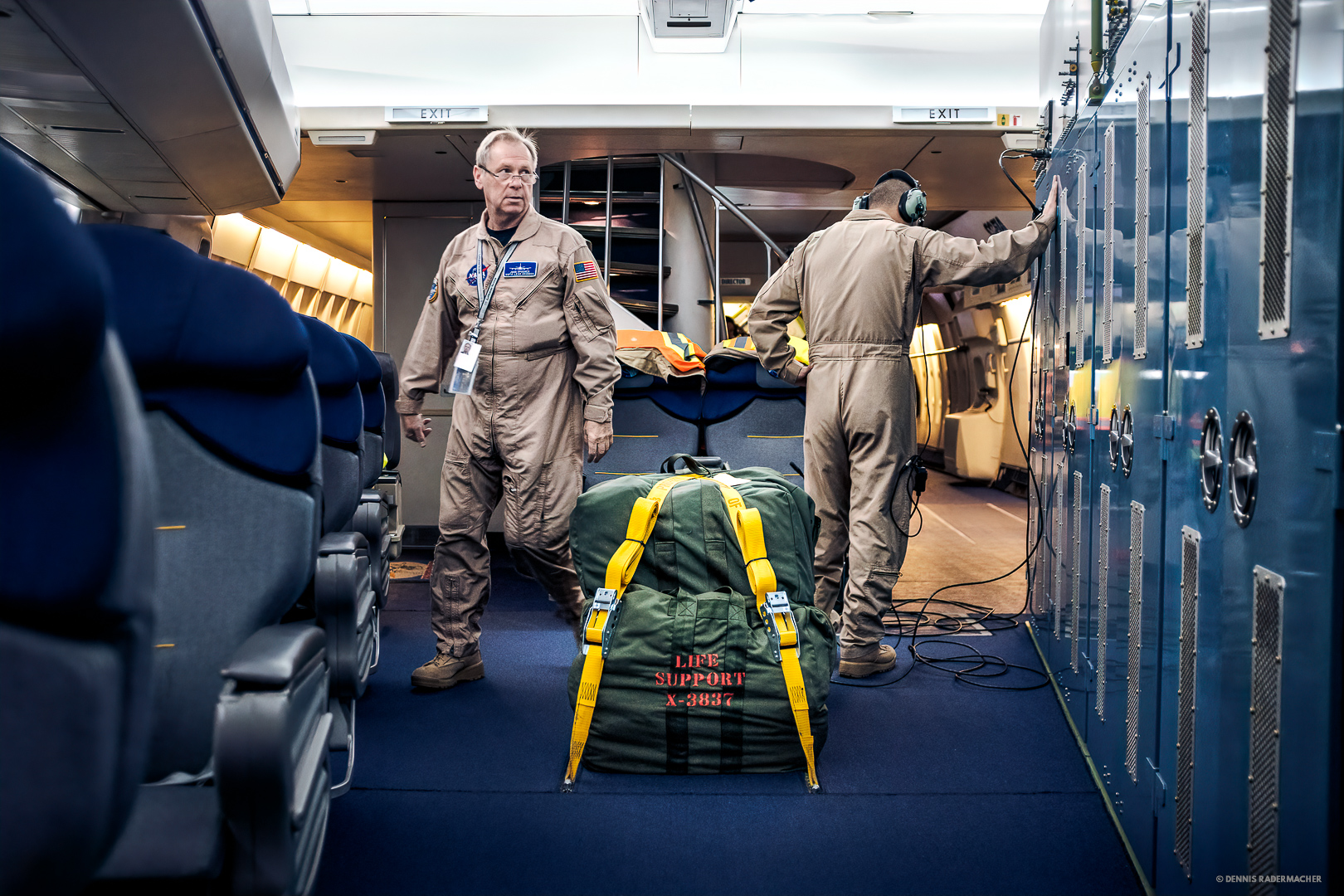
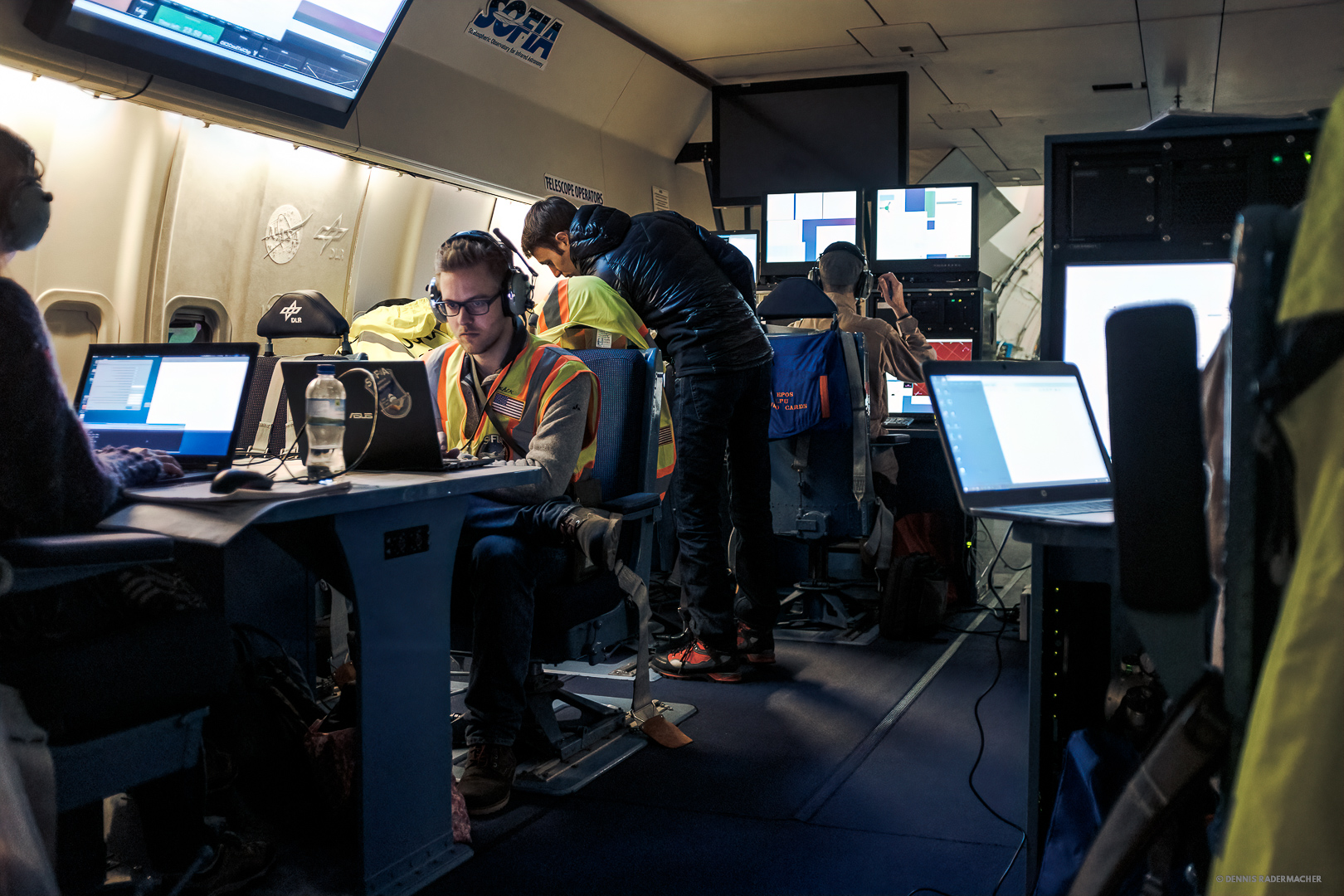
The blend of rough-hewn cabin interior and high-tech equipment creates the ambiance of a computer gaming event aboard a 1950s bomber.
Aurora Australis above the Southern Ocean.
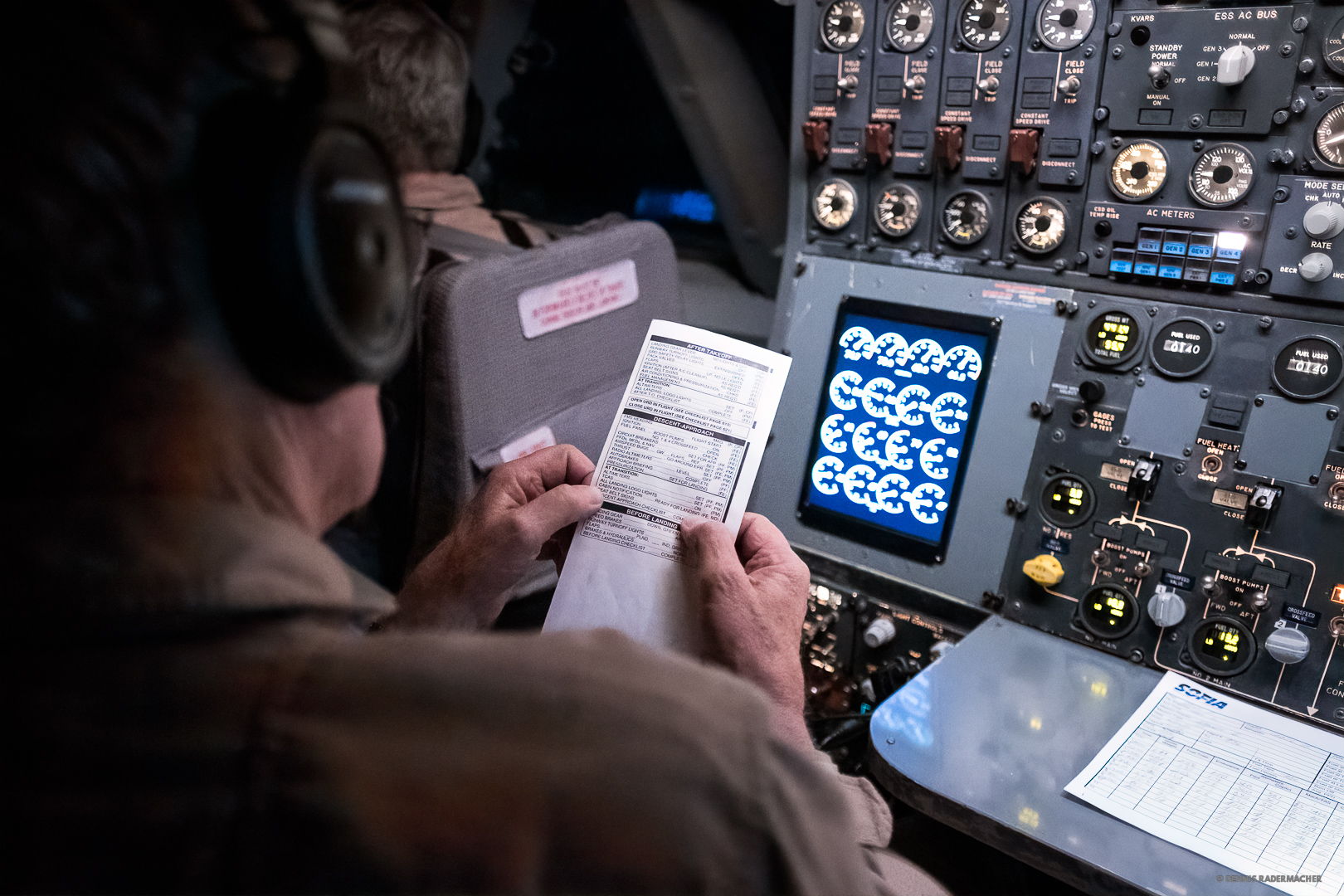
Flight Engineer Tom Speer is a retired pilot and veteran of the Boeing 747. He has been involved in the 747 programme since early flight testing in the 1970s.
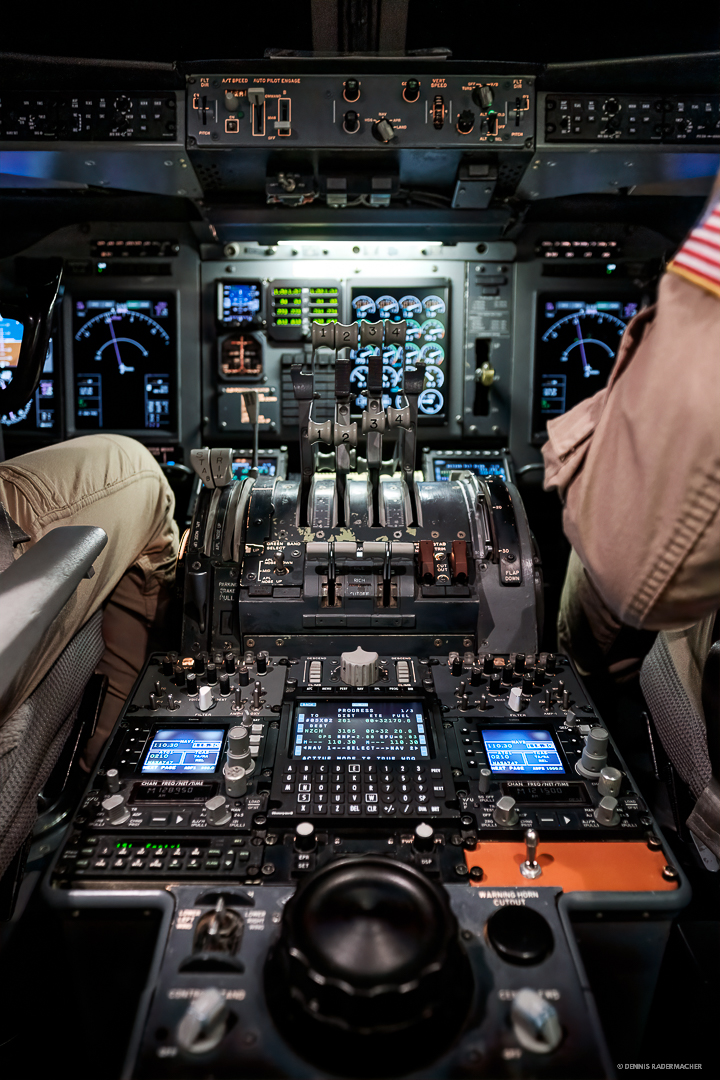
Working through a check list, Flight Engineer Tom Speer is preparing Clipper Lindbergh for its landing in Christchurch
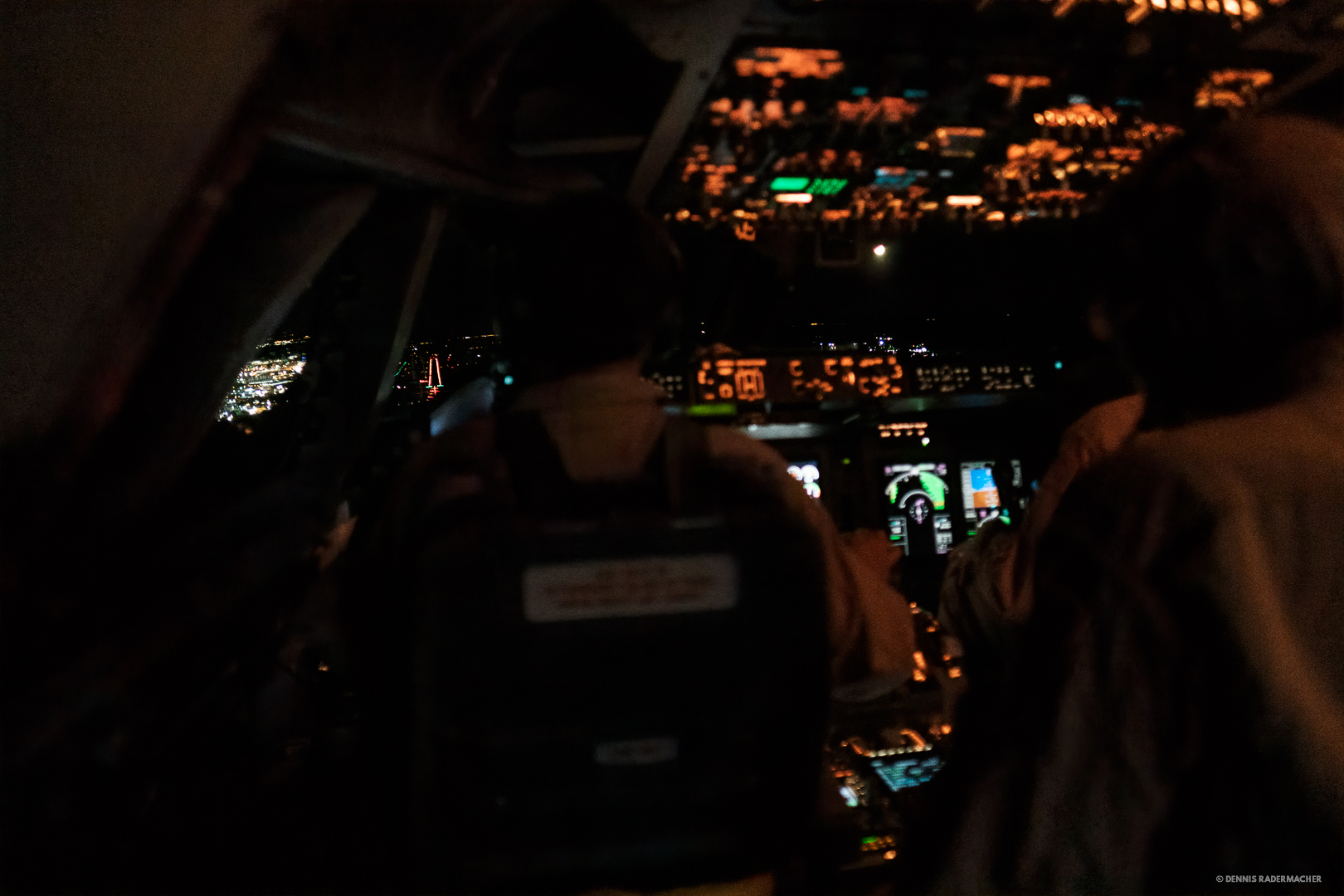
A long night of observations comes to an end as flight 476 approaches the lights of Christchurch airport.
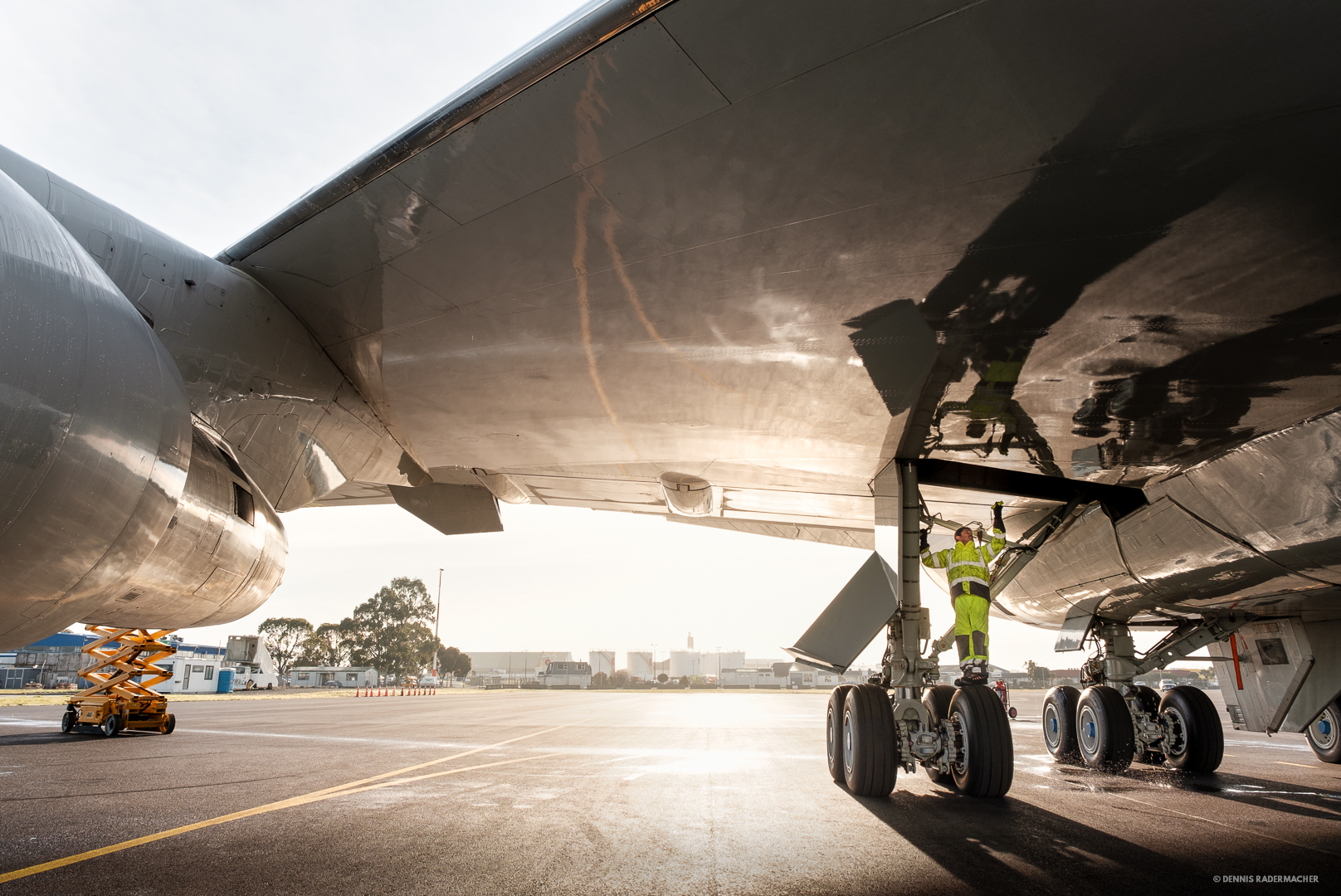
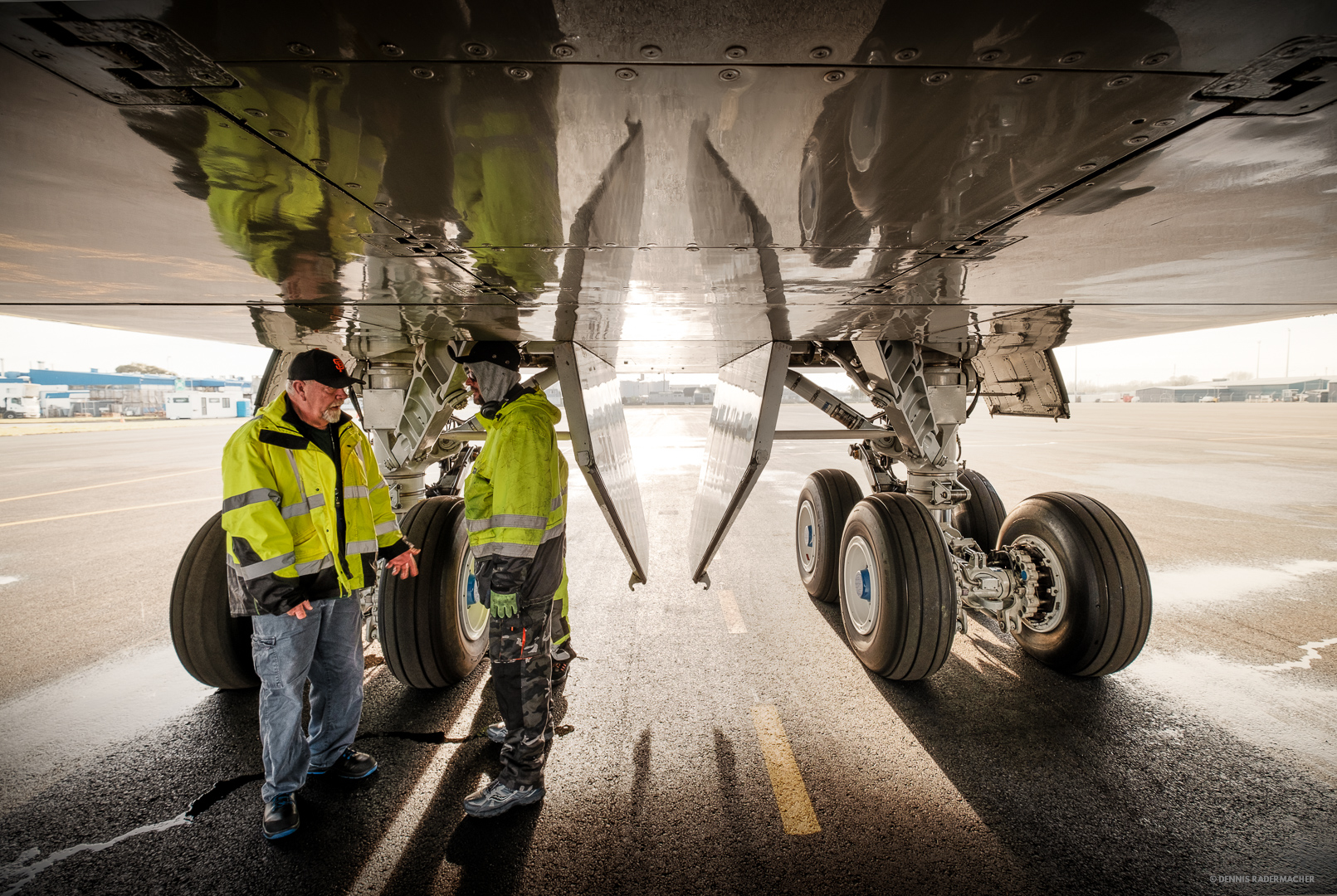
Aircraft Mechanic Francisco Rodriguez performs a post-flight inspection of Clipper Lindbergh's landing gear.
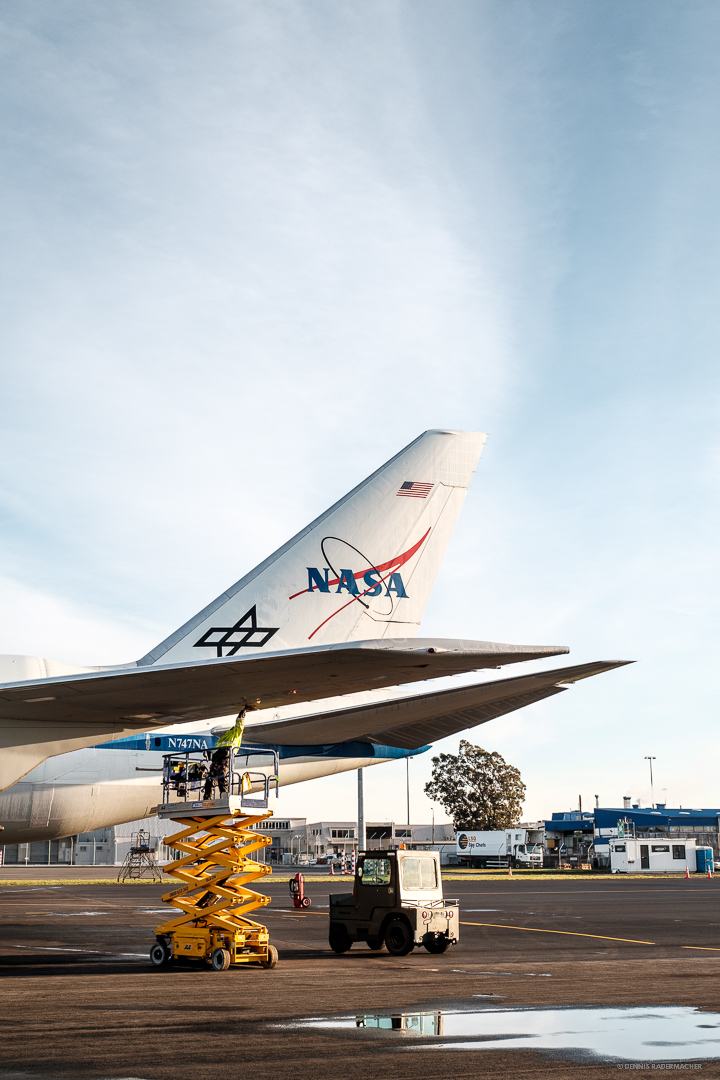
SOFIA is a 24/7 operation. Ground crew prepare the aircraft for its next mission while scientists and pilots head for their beds.
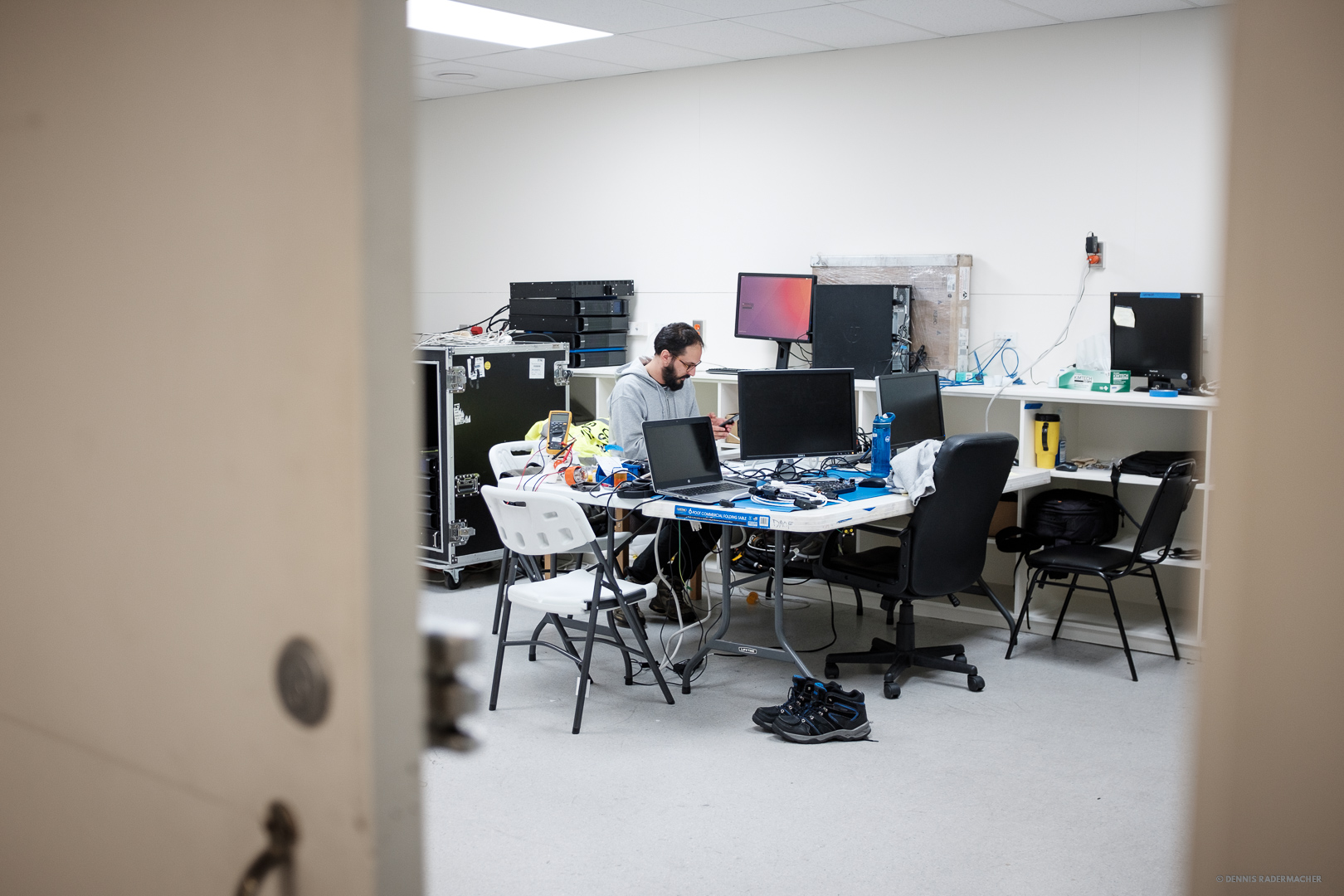
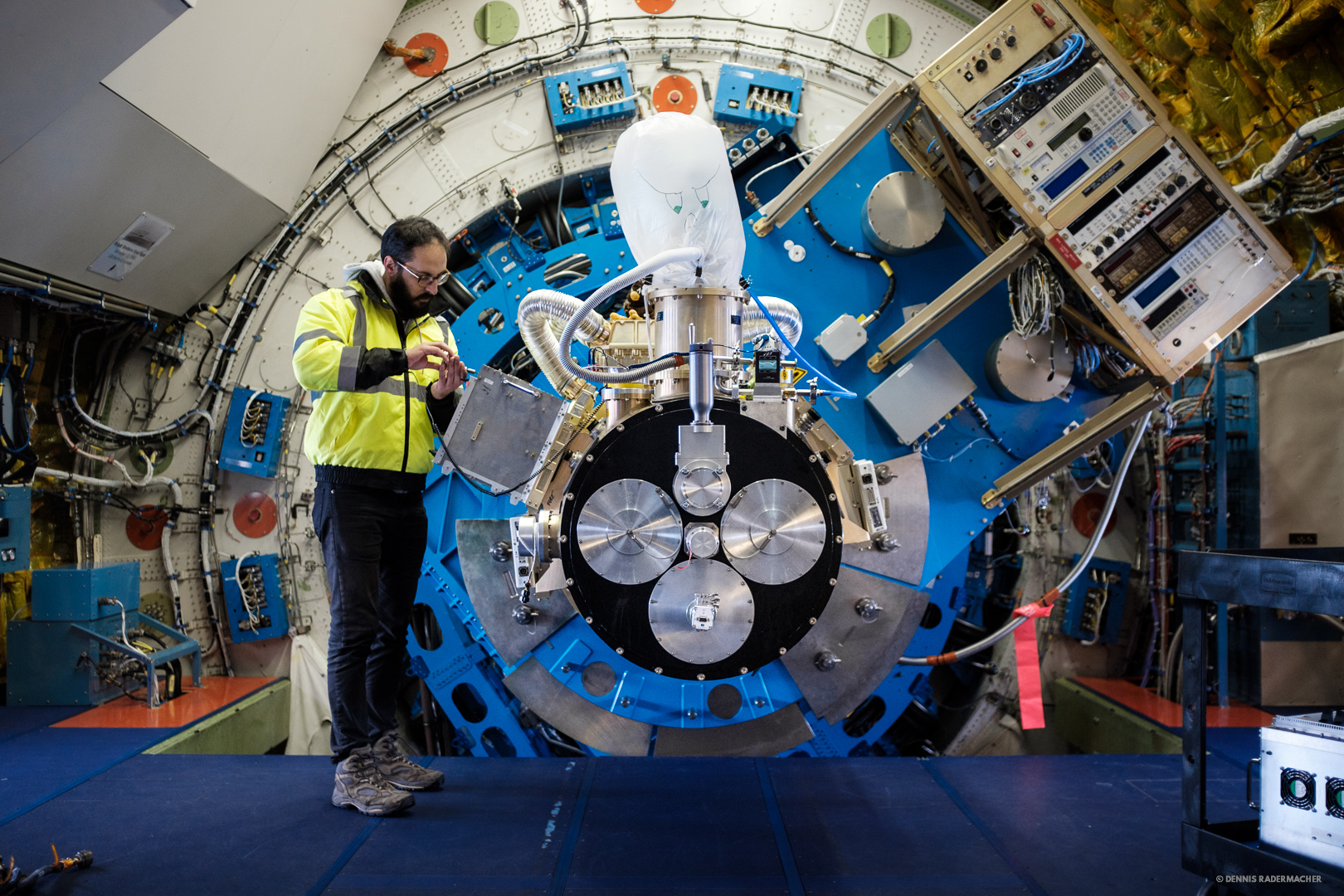
Whilst the US Antarctic Program is in winter hiatus, the SOFIA crew takes over their austere facilities. Inside one of the buildings, Instrument Scientist Enrique Lopez Rodriguez can be seen preparing for an instrument swap.
Ease of maintenance is one of SOFIA's advantages over orbiting satellites. Lopez puts finishing touches on HAWC+, the next science instrument in line.
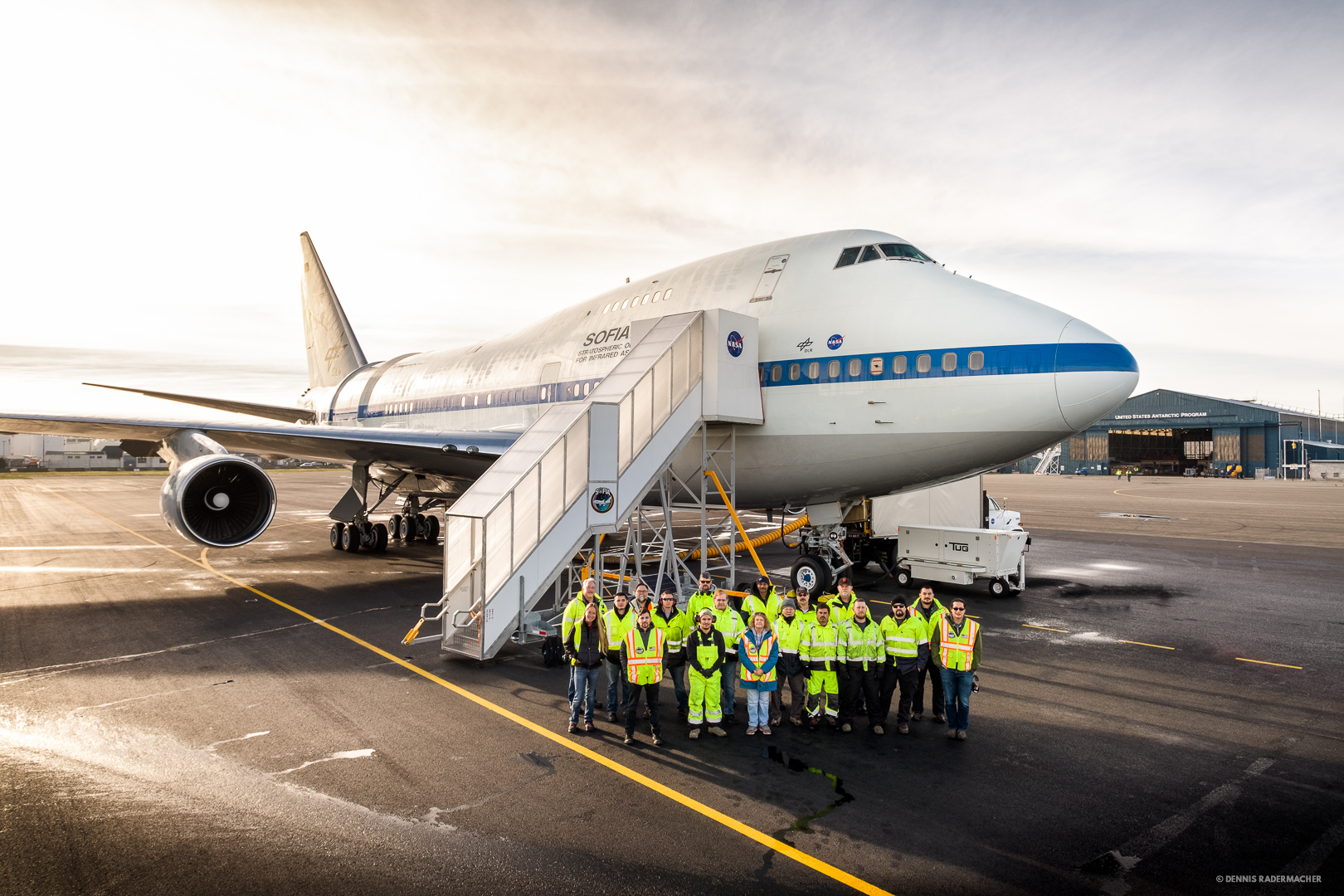
The ground crew day shift gathers for their annual team photo. In 2018, a team of 126 scientists, pilots, ground crew and support staff visited Christchurch for six weeks.
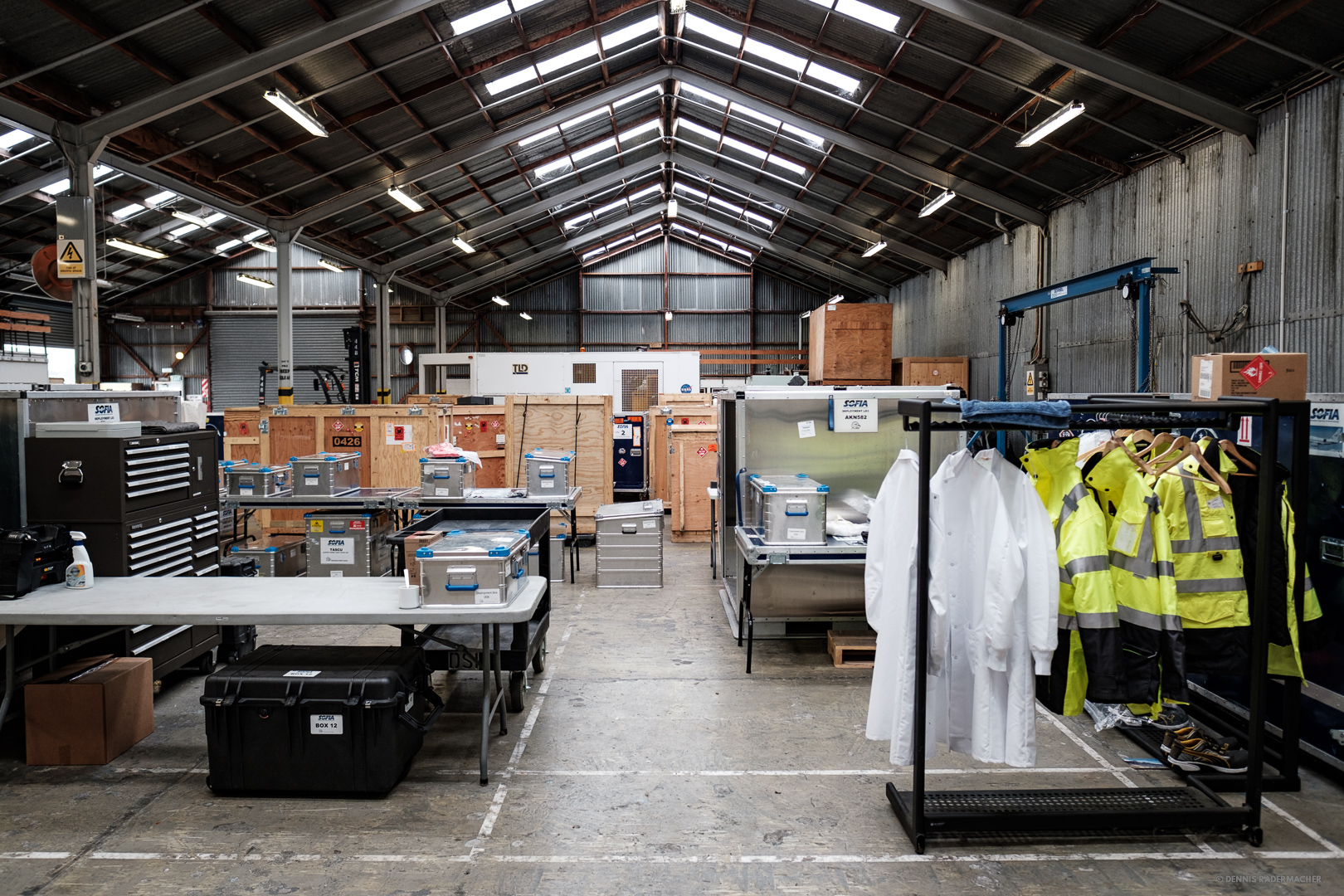
The plain work environment seems at odds with SOFIA's high-tech mission, but the team never tires pointing out that science per dollar takes priority over personal comfort.
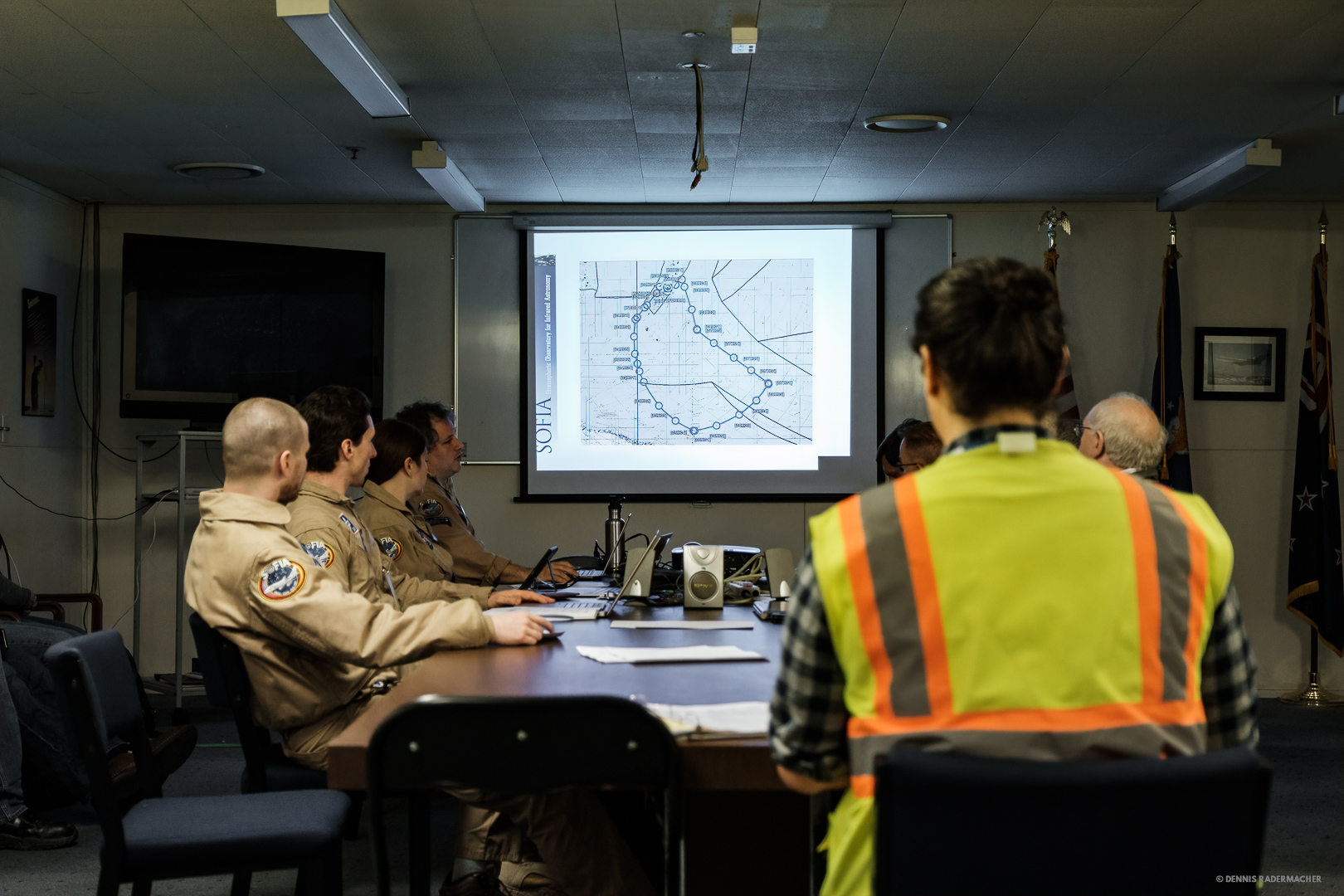
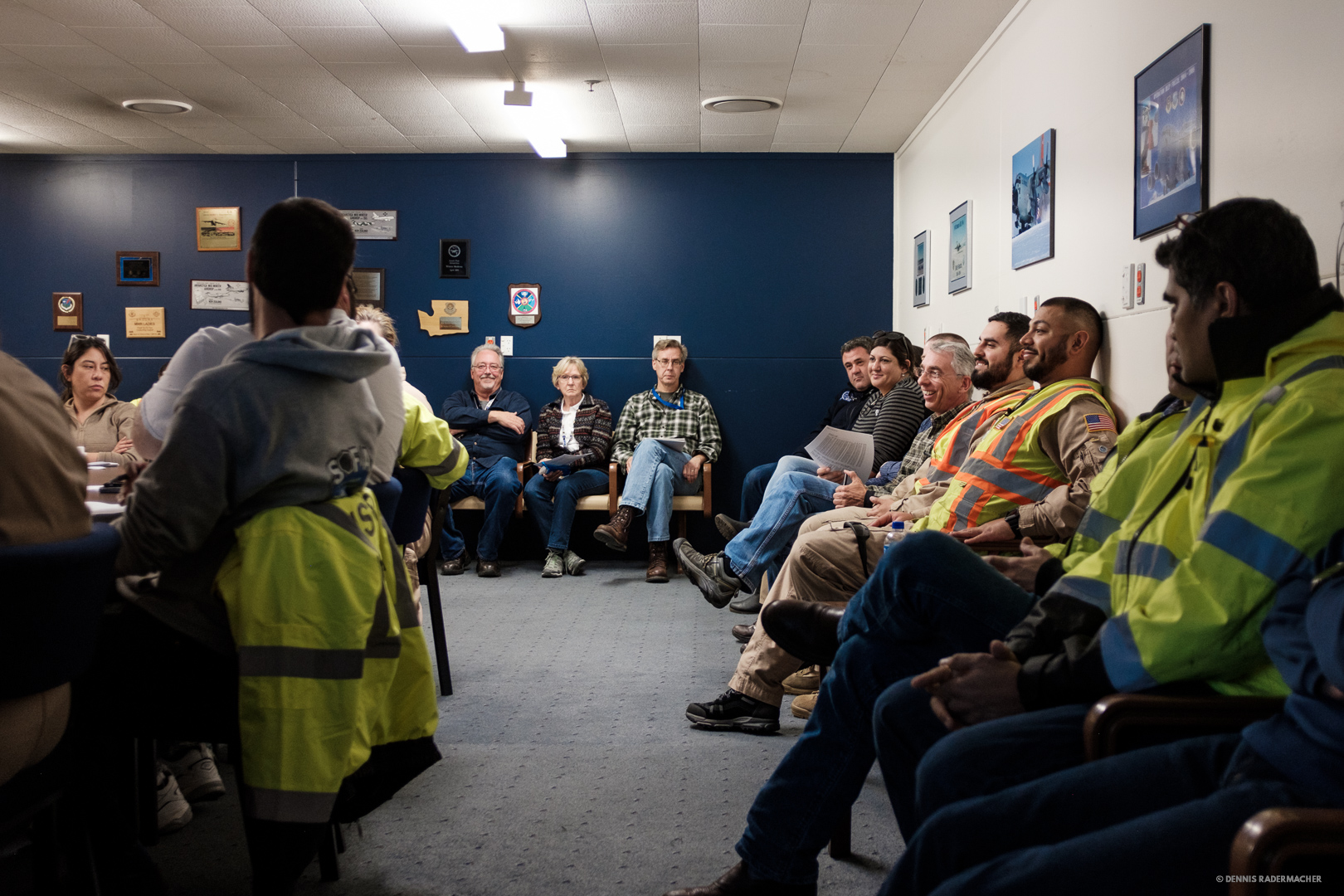
Mission briefings bring all departments together to compare notes for an upcoming flight ...
... and have a laugh.
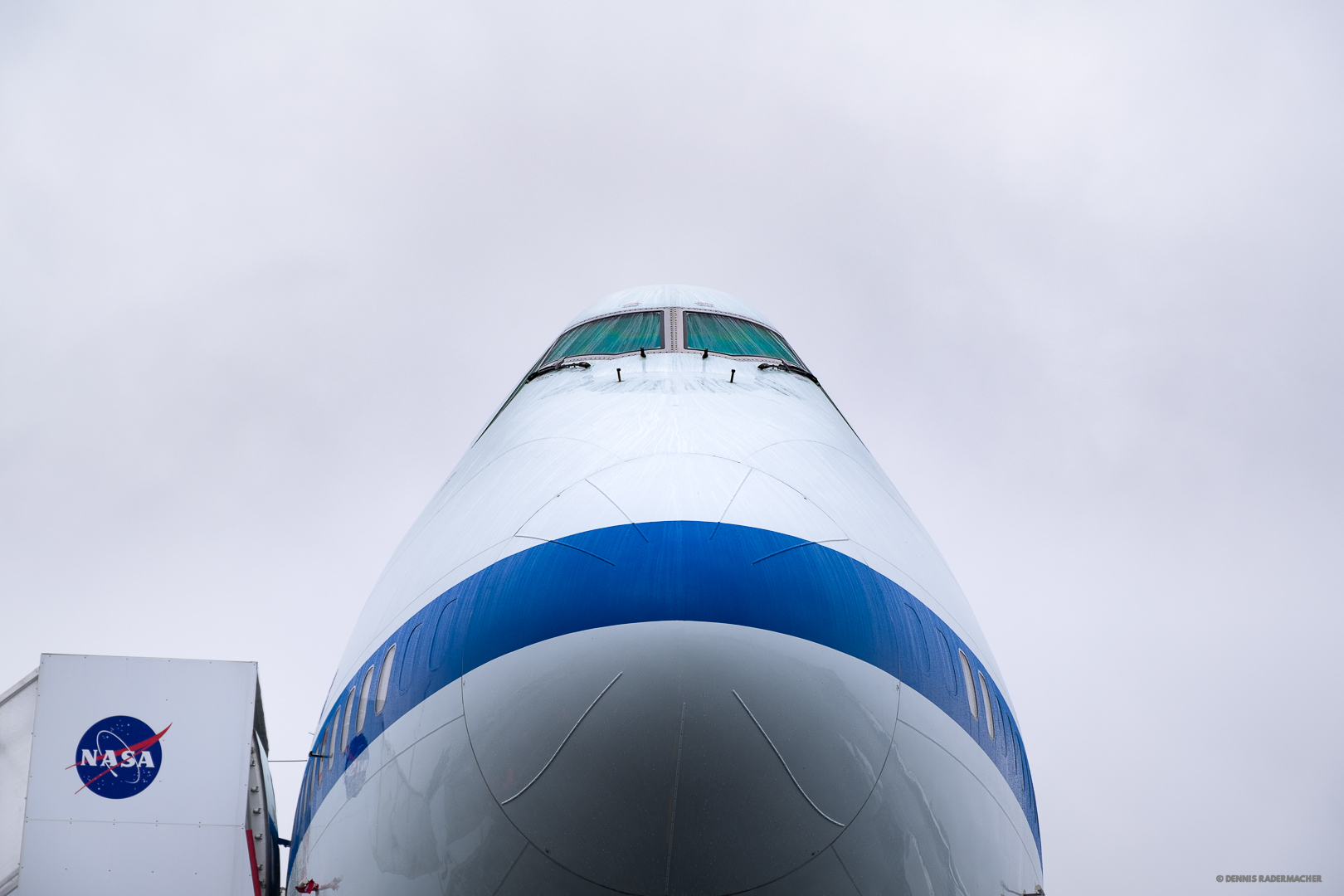
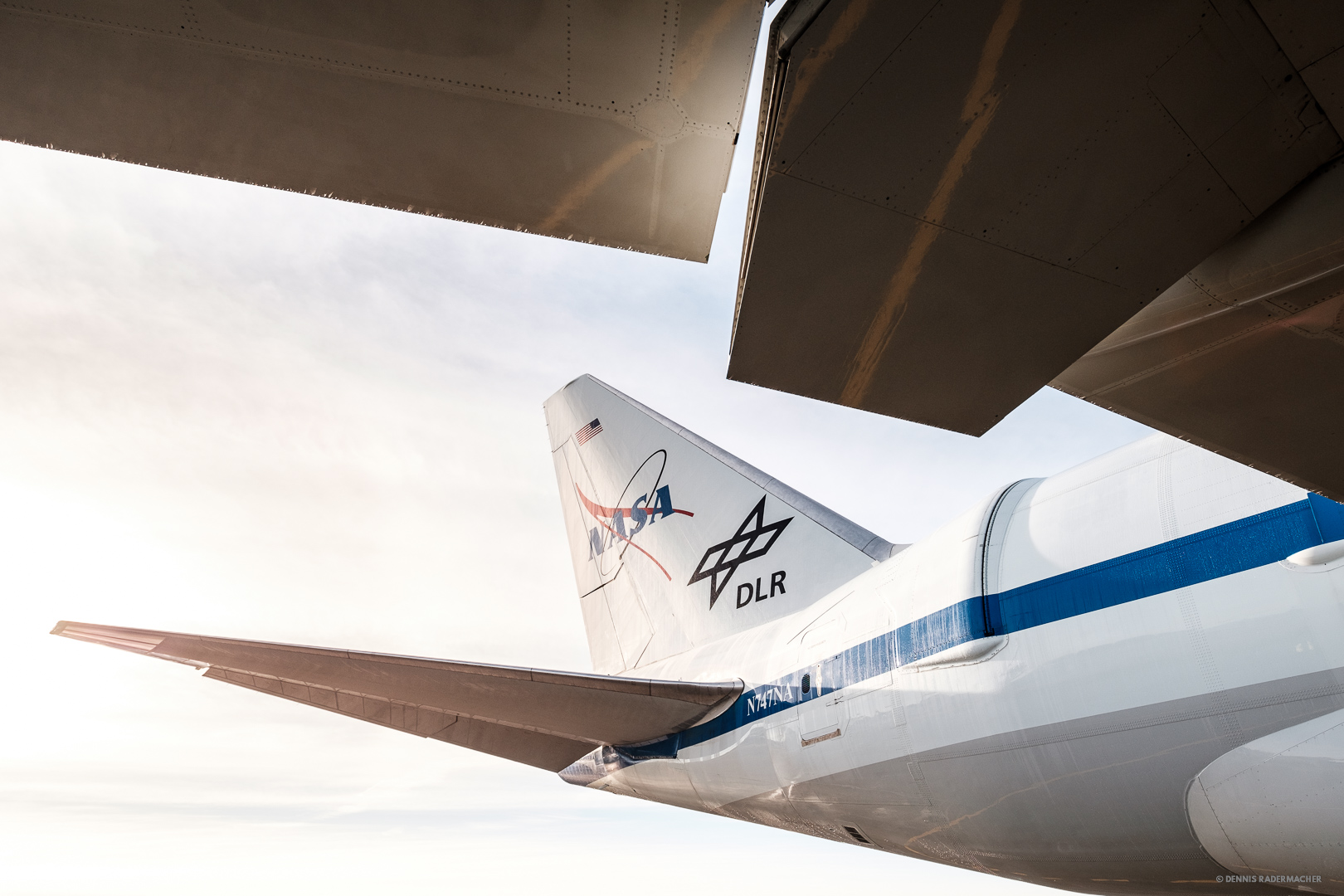
The SOFIA program is a joint venture between NASA and Germany's DLR.
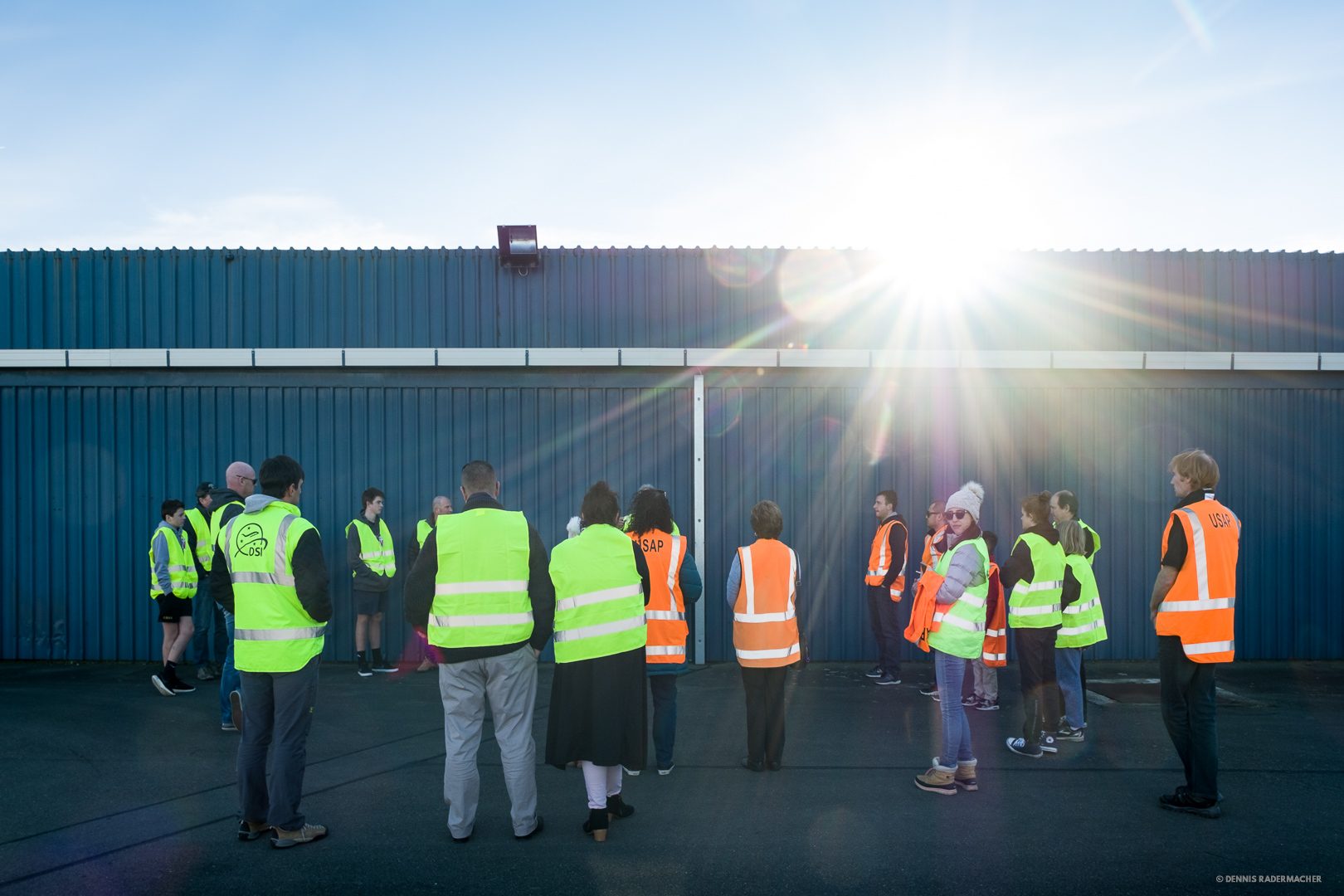
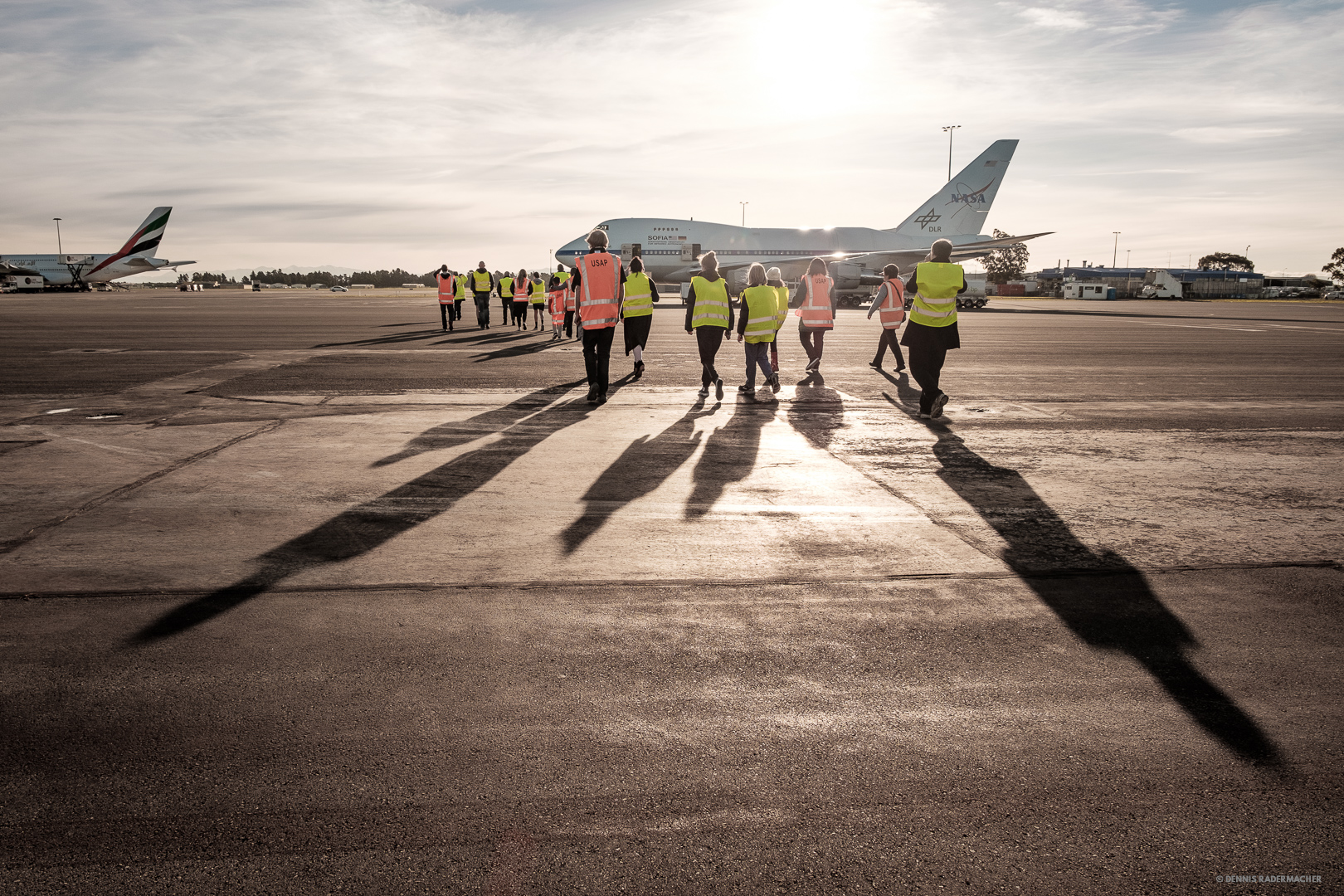
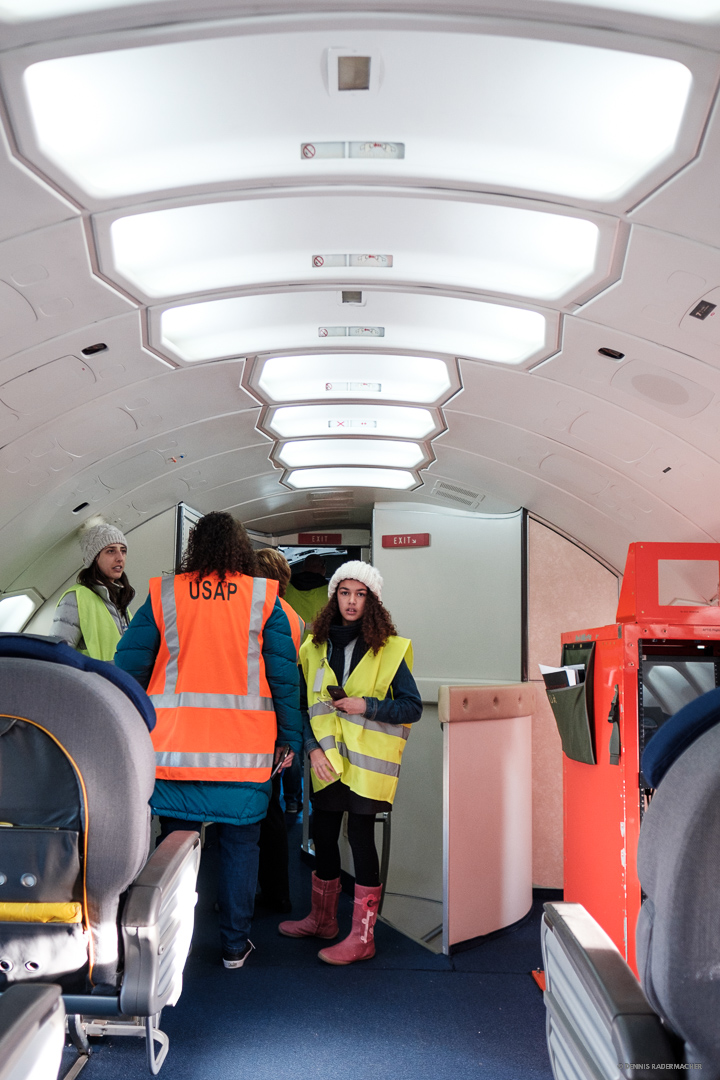
Kassandra Bell of the PR team keeps an eye on a roaming photographer as supporters of the program receive their safety induction before going aboard.
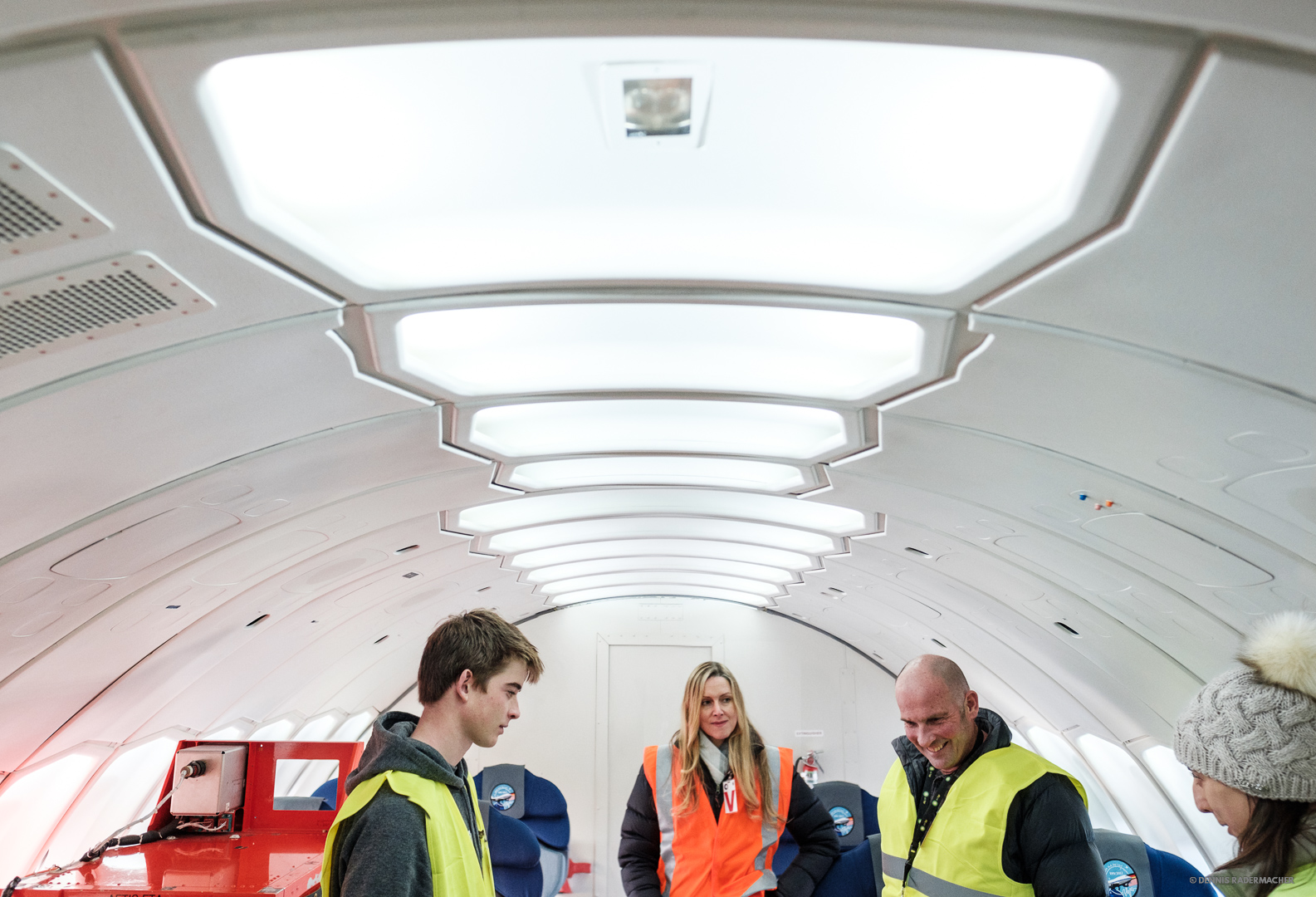
Visitors engage the SOFIA team in conversation on the upper deck of Clipper Lindbergh.
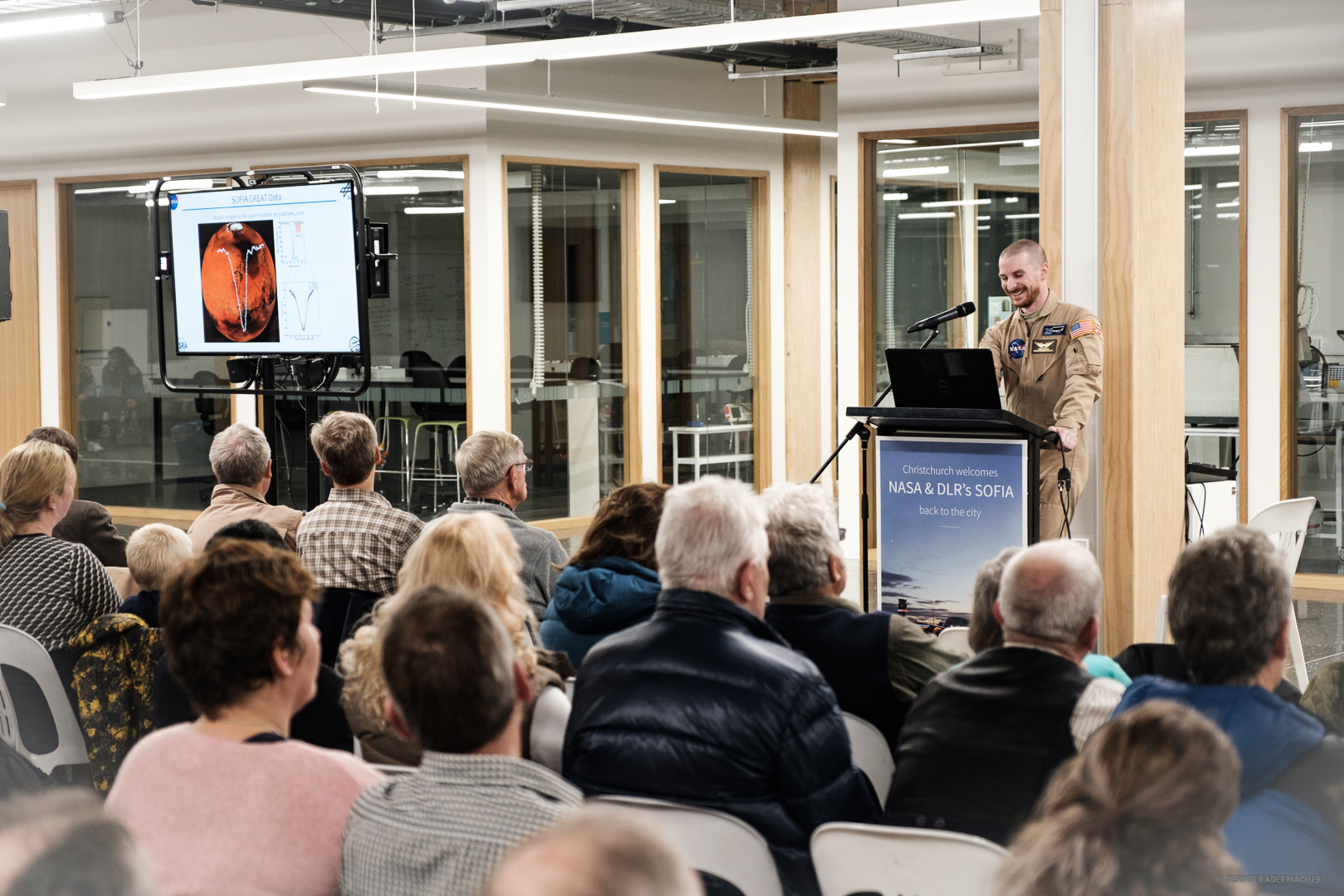
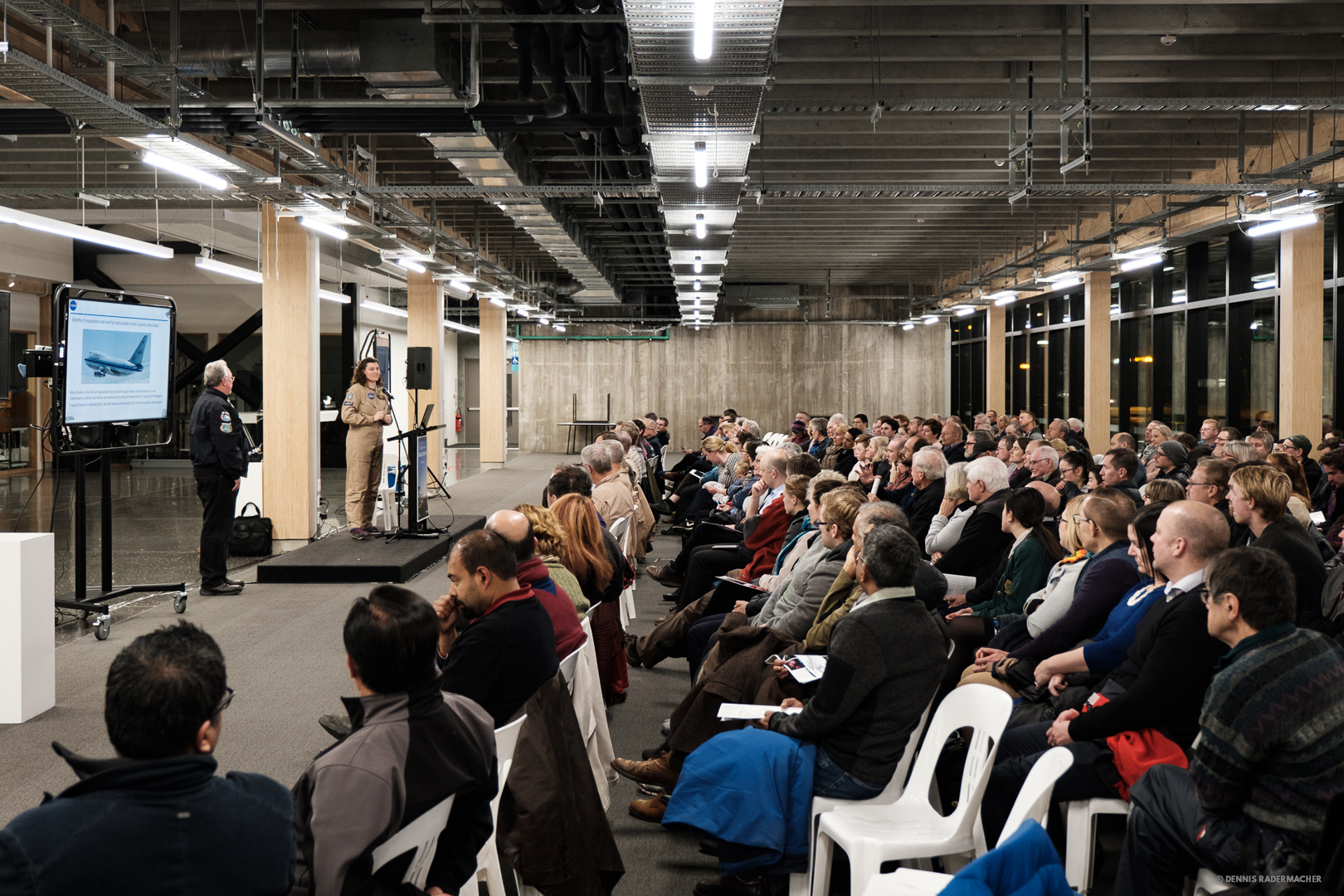
Members of Canterbury's Astronomical Society listen intently as Telescope Operator Samuel Richards explains research into oxygen contents in the Martian atmosphere.
Mission Director Karina Leppik's career path was far from a straight shot. Before her work for NASA, Leppik was a High School teacher, worked in a weather observatory, and organised a food bank.
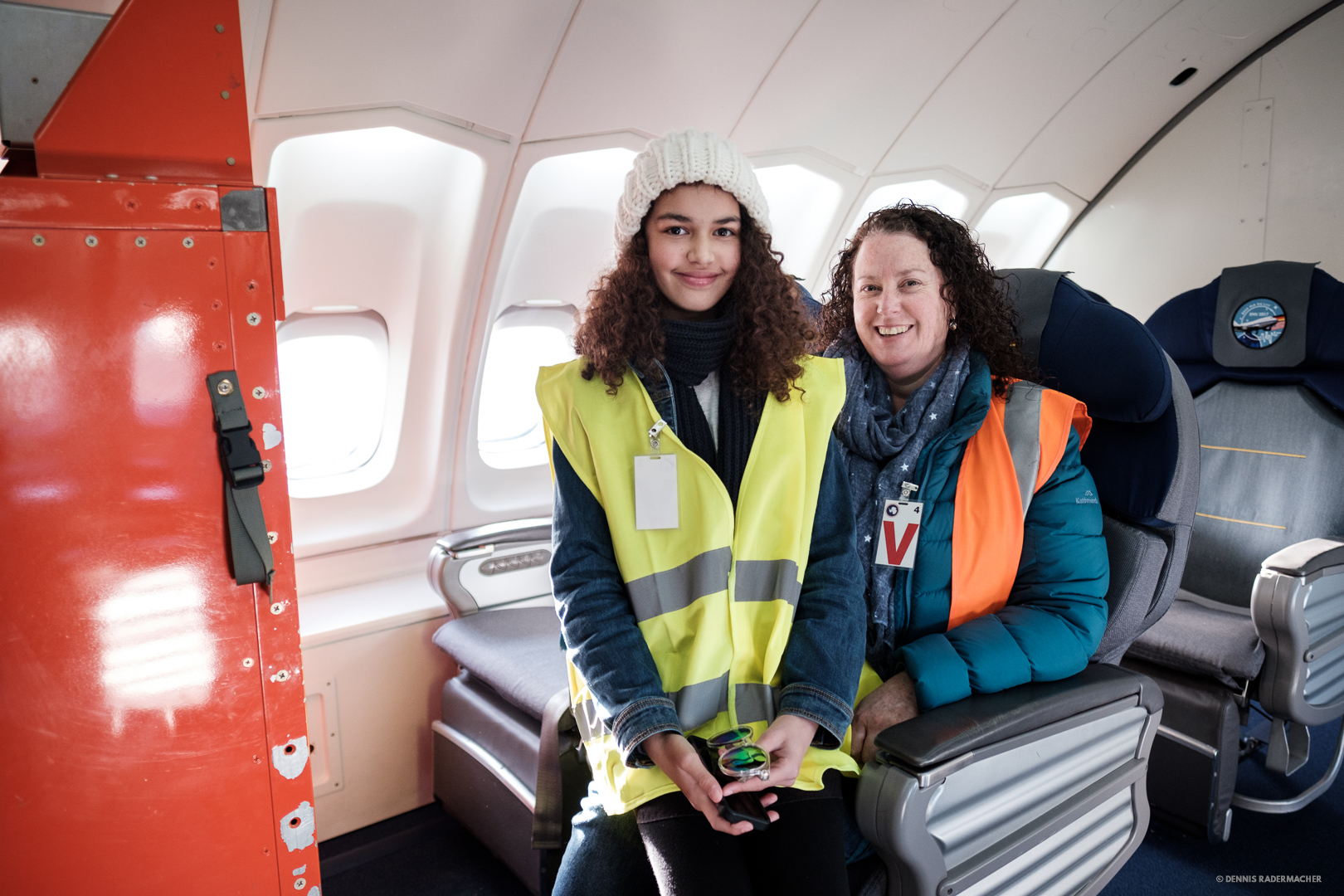
Sienna Reiser (11) records her impressions of Clipper Lindbergh for her father, a US Air Force Flight Engineer, who could not attend.
Sienna's mother, Daniella Reiser, shares her daughter's fascination for the complex machine that is SOFIA.
Whilst in New Zealand, SOFIA mapped the Tarantula Nebula, analyzed the atmospheres of Titan and Mars, observed magnetic fields in star-forming clusters at the heart of our Galaxy, and contributed to many other astronomical research projects.

Rendezvous with SOFIA

Every year the world’s biggest flying telescope visits New Zealand’s pristine skies. For six weeks, the Stratospheric Observatory for Infrared Astronomy finds a new home in Christchurch. Their flights take a team of scientists well above the Earth’s humid atmospheric layers, where clear views of stars and planets await.

This is a visual story of SOFIA’s scientists, pilots, engineers and support staff.

MEDIA ENQUIRIES

All images are copyright Dennis Radermacher. Please contact me at [email protected] for any kind of usage.
Thank you!

1 / 35
hanging_on_reducedhanging_on_reducedhanging_on_reducedhanging_on_reducedhanging_on_reducedhanging_on_reducedhanging_on_reducedhanging_on_reducedhanging_on_reducedhanging_on_reducedhanging_on_reducedhanging_on_reducedhanging_on_reducedhanging_on_reducedhanging_on_reducedhanging_on_reducedhanging_on_reducedhanging_on_reducedhanging_on_reducedhanging_on_reducedhanging_on_reducedhanging_on_reducedhanging_on_reducedhanging_on_reducedhanging_on_reducedhanging_on_reducedhanging_on_reducedhanging_on_reducedhanging_on_reducedhanging_on_reducedhanging_on_reducedhanging_on_reducedhanging_on_reducedhanging_on_reducedhanging_on_reduced